Showing posts with label herbal beverages. Show all posts

Tuesday, January 1, 2013

Māmaki

Māmaki is a small tree in the nettle family endemic to Hawaii. Native Hawaiians have used the plant's leaves and fruits as food and medicine for hundreds of years. The bark is also used to make cloth and rope.

For Christmas, my mother-in-law gave me a 0.55 ounce bag of dried māmaki leaves for use as a tisane. The recommended parameters printed on the package are: "Steep 1 teaspoon (1 - 2 leaves) in a cup of boiled water for 5 minutes, strain and resteep up to 3 times." I selected two large leaves and did just that.

The Packaging

The Product

The Liquor

This herb has a unique flavor. It is earthy, citrusy and grassy. I pick up notes of dandelions, rich black soil, bancha green tea, and metallic canned green beans. The aftertaste is where most of the citrus flavors linger. It almost reminded me of a somewhat earthy and musty Alishan high mountain oolong. Not bad.

Friday, November 16, 2012

Herbal Blends from Birds Eye Tea

Recently I received an email from Birds Eye Tea company asking if I'd be willing to review some of their products on my blog. I get similar emails fairly often but in the past I have always declined. Not this time though. I was intrigued, which was strange because they are an herbal tea company and my focus has always been on traditional tea made from the tea plant. That being said, I am interested in herbal beverages. Beyond the culinary realm, I really don't know much about plants and their many uses but I have been on a recent quest to learn more so Bird Eye's solicitation came at a good time for me.

After reading the email, I did some online research to see if I really wanted to review this company's blends. The first three things that attracted me to Birds Eye Tea were their logo, website and blog. The artwork has a smart, natural, d.i.y. feeling that appeals to me and their little bird logo makes me smile. From the blog, I learned that the proprietress, Sarah Farr, is a local Seattle herbalist who is extremely knowledgeable about plants. She uses both local ingredients (sometimes even forages for wild herbs herself) as well as more exotic ingredients such as Chinese herbs, real tea, and chocolate. I also like Birds Eye's business model which currently utilizes farmers markets, tasting events, etsy and a monthly subscription service to generate sales. Businesses such as this are almost always true labors-of-love and deserving of growth. For these reasons I agreed to review some of their blends.

One week later a box of goodness arrived at my house.


The box contained five blends and a tiny jar of DELICIOUS chai spiced honey. I've now tried all of the blends and offer the following humble reviews:

Floral Focus (Lightly oxidized Taiwanese oolong + Codonopsis + Osmanthus flowers)
The oolong tea base is actually high quality stuff. It's almost a shame to see it blended with the other ingredients. Fortunately its buttery, floral, refreshing goodness really shines through. The codonopsis adds a little earthiness to the flavor. I like!

Honeybush Spice (Honeybush + Cinnamon + Star Anis + Ginger + Cardamom + Orange zest + Licorice)
This blend is great. It was fine on its own but I'd probably only ever drink it with some soymilk and a touch of sweetener on a cold evening.

Slumbering Slope (Chamomile + Skullcap + Catnip + Spearmint + Rose + Licorice)
Sweet with fruity and grassy notes. Hippy bedtime tea. I like it. 

Awake (Yerba Mate + Tulsi + Bacopa + Spearmint + Currant)
Earthy and minty with a taste that reminded me somewhat of a chewable multi-vitamin. Not bad.

Xocolatl (Raw Cacao + Rose Petal + Chamomile + Spearmint + Ginger + Cinnamon + Star Anise + Chipotle powder + Roasted Cacao Nibs)
Yum! I liked this both straight and with soymilk and sweetener. The heat and spice from the ginger and chipotle are just right. Of the five, I see myself finishing this sample the fastest.

If you're into drinking herbal beverages or looking for a gift for a friend or family member who is, I would definitely recommend checking out Bird's Eye Tea.

Thursday, May 24, 2012

Urban Herbs #6 - Plantain

It's been too long since I steeped anything in my yard as part of my Urban Herbs series, and for some reason plantain keeps popping up on my radar lately as a healthy herbal tea to try. I first heard about infusing plantain leaves from a post on my friend Nicole's wonderful blog and since then I've seen a few other references to steeping this wild green. Today I went outside to forage some plantain to taste for the very first time.

Like most plants there are many different varieties of plantain but it's quite easy to find this type, plantago major, competing with the grass, moss and clover that makes up a typical Seattle lawn.

My Backyard Plantain:


Most of the references I've seen online for preparing plantain tea call for dried, chopped leaves. Instead, I chose to take ten fresh leaves, muddle them in a glass measuring cup, and then steep them for ten minutes with boiling water.

The Ten Leaves:


The Steeping:


The resulting liquor was a pale, watery, greenish-yellow color. It smelled like a green banana and edamame. The flavor was mild, grassy, and a tiny bit floral. It was astringent like a persimmon though not nearly as intense. Still, I could feel a "fuzzy buzzy" sensation on my lips and tongue. Not too bad... I'd call this experiment a success but next time I'll try drying and chopping the leaves before I brew them.

Wednesday, January 18, 2012

Urban Herbs #5 - Snowy Sage

We expect to get 5 to 9 inches of snow in Seattle today (right now we're at about four inches) and around these parts, even 1 or 2 inches is enough to stop school and work. So that means today is a snow day!

After some fun time spent sledding, making snow angels, and knocking the snow off of my tea bushes, I felt like sipping something a little different. I think an infusion of sage leaves will be just the thing.

People have been using sage for culinary and medicinal purposes for well over a thousand years. It is a popular remedy for many different ailments such as digestive problems and sore throats. We have a hearty bush growing in our front yard.

Sage green leaves in front of my sage green house.


I harvested about 20 of the fuzzy fragrant leaves and clicked on my electric kettle.


My daughter helped me to muddle the leaves. This step breaks up the tough leaves which allows a lot more flavor to be extracted during the infusion. I've been finding this is a "must do" before steeping freshly picked herbs from in or around my yard.


I steeped it for five minutes with boiling water and it was so good. Of all my five Urban Herb experiments this was the biggest success. It had a wonderful savory, smokey, peppery, earthy, sage flavor that made my mouth and throat feel great and lingered pleasantly for hours. I will certainly be infusing this herb again!

Tuesday, November 15, 2011

Urban Herbs #4 - Blackberry Leaf

My Urban Herbs series is monthly chronicle of my continued quest to taste an infusion of every nontoxic plant I can find growing around my house. In this month's installment I've selected blackberry leaves.


These leaves were picked from a particularly wild corner of my backyard. I took care to select smaller, more tender leaves and not to poke myself on the wicked thorns. It is very important with all urban foraging to be sure you're harvesting in areas without any pollution. Lucky for me, Seattle is filled with such places.

Blackberry bushes can be found all over the northwest and in the late summer I certainly eat my fair share of their ripe sweet berries. I've never tried infusing blackberry leaves before but I've recently learned that many people do, and that certain medicinal effects are attributed to the beverage. Some sources suggest the infusion is a good source of vitamins C and E, good for fighting colds and flu and for relieving sore throats.

I chopped up eleven fresh leaves of varying size and steeped them for 10 minutes in ~6 ounce of boiling hot water.


The resulting brew was light yellow and had a delicate grassy, citrus aroma. The flavor of the infusion was similar. It yielded wild weed and grass-like notes with soft peaks of citrus peel and tart blackberry flavors. It was a little tannic but not unpleasant. I think if I were to drink this herb again I would try picking more leaves, drying them, crumbling them up and make it a bit stronger.

Wednesday, October 26, 2011

Urban Herbs #3 - Lemon Balm

Lemon balm (Melissa officinalis) is all over the place here in Seattle and we can always find a few of these shrubs growing around our yard. My kids like to nibble the leaves. I'll sometimes nibble them too, but more often I'll just pick a few, rub them between my fingers and smell their nice lemony aroma. Until today I've never tried drinking a plain infusion of lemon balm (though I'm sure I have had them before in blended herbal beverages).


Lemon balm tea is considered a healthy infusion for colds and flu as well as a calming and soothing beverage. It makes a nice addition to aromatic and medicinal herb gardens and has the added benefit of attracting beneficial bees who help to pollinate nearby plants.

I picked ~10 fresh tender leaves and minced them up with a knife. I steeped them for 5 minutes using 5 ounces of boiling hot water. The resulting infusion had a pleasant grass and citrus aroma and a pale watery yellow-green color.

In my opinion it tastes great. Like most herbal infusions, lemon balm is probably hard to over steep. Next time I going to use more leaf and a longer steep time. The flavor was not at all bitter and was too weak to be perceived as tart. I was reminded of lemon juice, lemon peel, rose hips and meadow flowers. It left with a nice aftertaste and feeling in my throat. I can easily see myself drinking this infusion often throughout the winter and sharing it with my two young children.

Saturday, September 17, 2011

Urban Herb #2 - Fennel Seed

All over the garden plants are going to seed. One of them happens to be this large, healthy fennel plant by my front door.

The Plant.

The Seeds.

I've always liked fennel seeds but I never thought about drinking them. In fact I used to wonder why, back when I worked at Teacup, random people would occasionally ask me if we sold "fennel seed tea." We didn't, so I would redirect them to a health food store or other local apothecary.

I did a little research and found out that fennel seed is considered a "carminative," which according to wikipedia is "a herb or preparation that either prevents formation of gas in the gastrointestinal tract or facilitates the expulsion of said gas, thereby combating flatulence." (As an adult-vegan-male I found this tidbit particularly interesting.)

Because of all this I've decided to feature fennel seed tea as this month's "Urban Herb."

I picked off a few umbels of fresh young seeds and put them in a small gaiwan. I bruised them slightly with my fingers and then poured in boiling water. I let them steep for five minutes.

Seconds before the steep.

The resulting herbal infusion was a light pale yellow color with an intense fennel aroma. I sipped it and found it to be quite pleasant. It was surprisingly mellow in my mouth, I might even say that it was a little bit too weak for me. It had a licorice-like sweetness and vibrant mouth-feel. It was very one dimensional but I'd say if you're into this particular flavor you'd probably really enjoy it.

... and as for the infusion's carminative effect? Let's just say I haven't farted in a week and I'm now beginning to worry!

Ha... just kidding... I'm really not sure if it did anything at all.

Wednesday, August 10, 2011

Urban Herb #1 - Wild Chamomile

This is the alley behind my house.


It is filled with many urban herbs. One of which is wild chamomile (aka pineappleweed).


As it turns out this useful and tasty plant can be found all over Washington, especially in sandy soil near trails and paths. I've gotten into the habit of picking a little flower and crushing it between my fingers because it really smells amazing.

Wikipedia says: "The young flower heads can be used to make tea by steeping a handful of the flowers in hot water for ten minutes and then straining."
OK. I can try that.


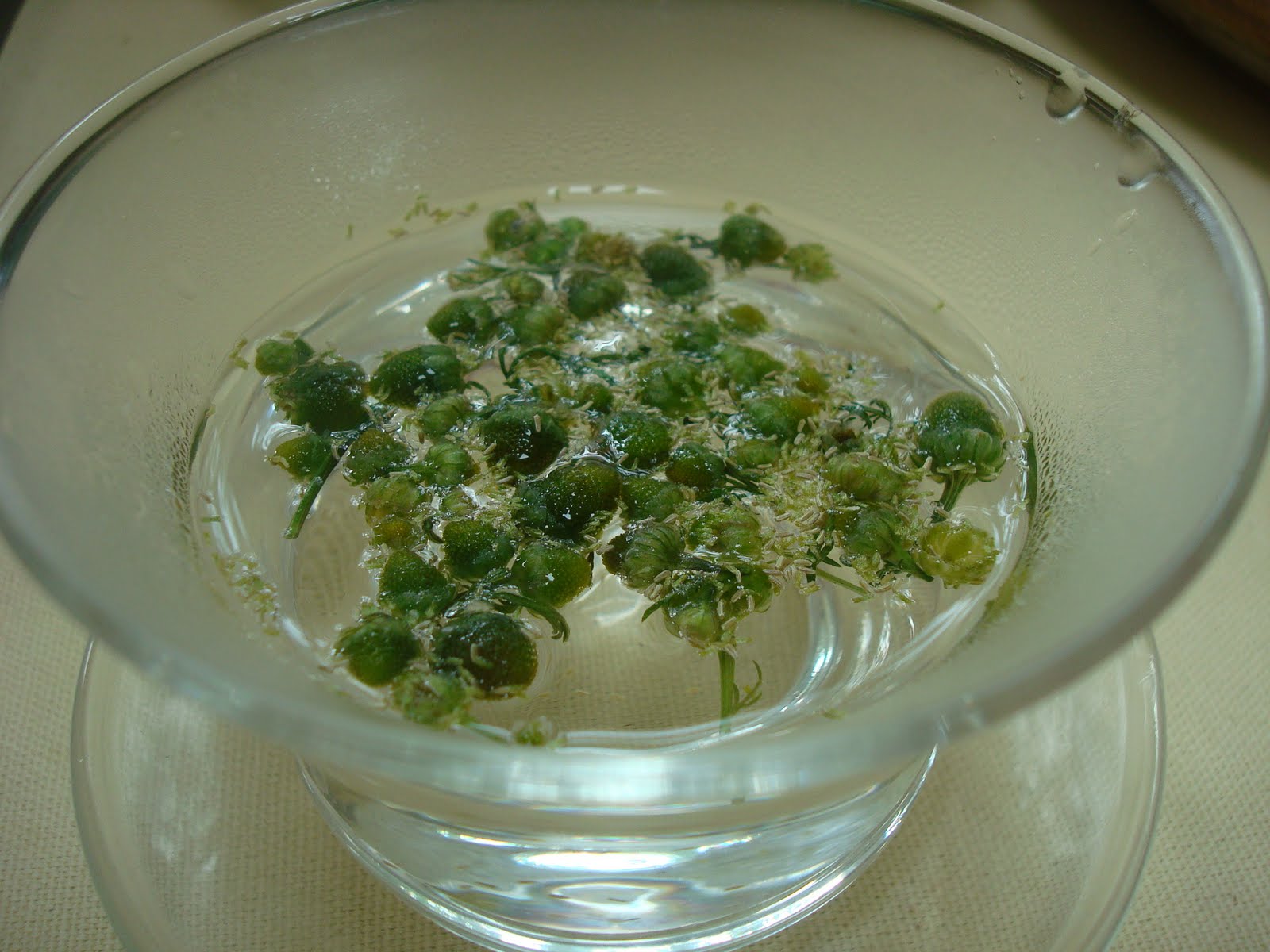
I used about one teaspoon of flowers in a half full gaiwan with boiling water. After a ten minute infusion the liquor is a pale yellowish-green color.

The smell is lovely in my opinion. It's like the freshest chamomile aroma I've ever smelled with a twist of ripe pineapple juice. The flavor is sweet, soothing and floral like any great chamomile flower infusion would be.

If you dig chamomile tea then you would probably like this.

It's very relaxing.

[Yawn]

I am starting to feel pretty sleepy.

Zzzzzzzzzzzzz

Thursday, July 21, 2011

Korean Lotus Root Infusion

My new friend Jason C. (president of the Penn State Tea Institute) recently returned from another one of his Asian tea treks. While he was in Korea I emailed him about my desire for some "primo Korean green tea." Jason didn't find any worthy specimens so instead I was so generously treated to a small can of dried lotus root tea!


The lotus is a beautiful and useful edible plant. It carries deep symbolic meanings for Buddhists. I've eaten lotus root before and found it to be quite delicious but for some reason I'd never thought about infusing it as a herbal tea. As it turns out lotus root tea is a very popular beverage the world over. The folks at Eden Foods state that lotus root tea is a macrobiotic staple and "long valued for its contribution to respiratory health."

I steeped about 8 slices of lotus root in ~8 ounces of boiling hot water for 5 minutes. The resulting cup had a pleasing amber color. The aroma was roasty, earthy and savory and it reminded me somewhat of french fries. The flavor in the mouth was a lovely surprise. It had a sweet, nutty, oolong-like flavor that I found slightly floral and very satisfying. I'm excited to have discovered this exotic infusion.

Wednesday, June 1, 2011

Blueberry Tisane

Today the Association of Tea Bloggers is presenting a new Blog Carnival. Our topic is, "Write about how you brew one type of tea." To find links to all of the participating ATB members' blogs please visit the the distinguished tea guru known as Gongfu Girl.

I chose to write about how I brew Blueberry Tisane. I don't usually drink herbal beverages or tisanes (Ha. If only I had a dollar for every time a "serious tea drinker" makes this claim!) but lately my three-year-old daughter has been requesting "Blueberry Tea."

I don't have any blueberry tea... but I do have frozen blueberries... so I came up with a new recipe.

Here's what you do. First, gather the equipment: a little mortar and pestle and ceramic teapot (my preferred teapot is Sapphire). Then take the blueberries out of the freezer and pop a few in your mouth for good measure.


The key to making it so delicious (and it really is) is to smash up the berries. I've been using around 10 berries per cup but I find that you can't use too many. The stronger the better in my opinion.


It also helps to make sure your teapot is very hot before you begin. Steep the pulverized berries for at least 10 minutes with boiling water. Placing a tea cozy over the pot while it steeps will help keep the water as hot as possible. If your infusion doesn't have a dark purple color it will probably taste too weak.

À votre santé!

Friday, April 1, 2011

88 Treasures Tea (八十八寶茶)

A week ago, while browsing the tea aisle at 99 Ranch Market in Kent, a little red box of tea caught my eye. It was called 八十八寶茶 or 88 Treasures Tea, and I could see that it was from a tea company based out of Xining (西寧), China. It didn't cost too much so I decided to give it a try. In the least, it would make a good blog post.


You may already know that ba bao cha (eight treasure tea) is very popular in Xining. Eight is considered a lucky number to the Chinese and so the blend will always contains eight ingredients.

I looked closer at the package in my hand... and, sure enough, this blend appears to actually contain 88 ingredients!

I knew it would take me a hundred years to translate the packaging on my own, so I asked a Chinese friend who sometimes visits me at Teacup. He took the box home and then emailed me his translation a couple days later.

Here's what it says: "New Organic 88 treasure tea is the perfect, healthy gift for dad! Our unique blend of herbs and teas contains eleven times the power and longevity of simple eight treasures! Our tea is good for the prostate and vitality. Give dad the gift of life and great taste!"

The box even has a little picture of a young man giving a cup of tea to an older man printed above the product name. At this point it dawned on me that the 88 also appeals to the Chinese love of puns, because 88 and dad can both be pronounced "Ba Ba" in Mandarin. (That's why Chinese father's day is August 8th.)

So what's in the blend you ask? Here's the list that I was given:
Chrysanthemum, Astragalus, Wolf Berry, Jujube, Ginseng root, Tuckahoe, Tangerine Peel, Danshen, Snake Gourd Seed, Star Anise, Common Squill Bulb, Horsetail, Longstamen, Common Smoketree, Fritillary, Wax Gourd Peel, Sweet Osmanthus Flower, Dogbane Leaf, Rock Sugar, Ginko, Pricklyash Peel, Elm bark, Chamomile, Rosehips, Towel Gourd Stem, Raspberry leaf, Korean Monkshood, Loquat Leaf, Papaya leaf, Peppermint, Shanlu Tea, Spearmint, Drug Sweetflag Rhizome, Raisin, Oak Bark, Strawberry Leaf, Bat Guano, Vanilla, Passionflower, Kelp, Red Clover, Wild Cherry Bark, Rhubarb, Peony, Sand Root, Licorice Root, Damiana, Goldthread, Ma Huang, Hyssop, Candied Hawthorn, Stinging Nettle, Dong Quai, Lemon Peel, Puer Tea, Wintergreen, Tuberous Sword Fern, Lavender, Lemongrass, Bombax Flower, Ginger Root, Nux Vomica, Elder Flowers, African Plum, Salvia, Japanese Climbing Fern Spore, Nine Winter Monkey Tea, Echinacea, Marshmallow, Fermented Yarrow Flower, Clove, Lycopene, Water Vapor, Gut Flora, Selenium, Nut Husk, Saw Palmetto, Balloon Flower Root, Gypsum, Zinc, Snow Lotus, Urea, Dandelion, Valerian, Linear Stonecrop, Mustard Seed, Wooly Datchmanspipe, and Green Tea!

Here's what it all looks like:


I steeped it for five minutes in a small ceramic teapot (Chip to be precise) using boiling hot water...

...and here's the result:


So what does it taste like you ask? It's very sweet, with an odd metallic note and a surprisingly mild finish. The most noteworthy flavors were mud and syrup. I did pick up a little bit of gingery-heat in my throat about an hour after drinking.

As for the health benefits of imbibing so many exotic herbs... I really can't make any firm declarations. I feel a little bit light-headed and sweaty and my pee has never looked darker.

I probably won't drink 88 Treasures Tea again.

Monday, December 27, 2010

Ba Bao Cha Year #3

I have started an odd little holiday tradition. I drink a small cup of Ba Bao Cha (八寶茶) (eight treasure tea) and then I blog about it.

As I mentioned in my post Ba Bao Cha Revisited from 364 days ago, my friend Tiffany gifted me 19 single serving packs of Ba Bao Cha. I only drink one pack per year so...

...now I have these 18 packs left.


Besides rock sugar and a scant amount of green tea, every pack is a little different. I chose that pack on the top which appeared to be the only one with an orange slice in it.

The dry contents looked like this.


I steeped it for five minutes with boiling hot water. The resulting soup had an orange color and a fruity aroma.

I asked my wife to try a little sip. She did, and then instantly made a "yuck face." She did not want anything to do with it.

I then asked my almost three year old daughter, who was busy playing by herself in the living room and had not witnessed her mother's negative reaction, to taste it. She did... and had the exact same reaction as her mother.

I, on the other hand, didn't mind the flavor too much (although I'm quite sure that I could never drink more than 2 ounces in a single year). I liked this pack a little more than last year's sample because it was fruitier and less like drinking perfume.

Here is a shot of this year's eight holiday treasures!


Now lets see... I have: two cherries chopped in half / four goji berries / two chrysanthemum blossoms / rock sugar (which I'm not sure I would actually count as a treasure but hey whatever) / some sliced strawberry / one orange slice / and about 1 gram of broken green tea leaves.

1...2...3...4...5...6...7... uh... wait a second now... that's only SEVEN treasures! I've been robbed!

Oh well. I guess it's now time to go and brew some good tea anyway. Maybe next year I'll get eight treasures. Whether or not you even care, you can still count on me to tell you all about it in December of 2011.

Happy New Year!

Monday, December 28, 2009

Ba Bao Cha Revisited

Last year, I chronicled my first experience with Ba Bao Cha (八寶茶) (eight treasure tea). It is a blend of green tea, rock sugar, and eight different fruits and/or flowers and is a relatively popular beverage in certain parts of China. According to Google Analytics, my Ba Bao Cha post has brought more random searchers to this tea blog than any other post.

After reading my original review, my good friend and tea industry contemporary, Tiffany Picard, sent me 19 single-serving packets of different Ba Bao Cha blends. Because I am very seldom in the mood to drink flavored or sweetened tea, I decided that I would brew one packet every year around Christmas time.

This morning I decided it was time to try one, so I fired up the kettle and grabbed a gaiwan. Last year I used a larger teapot and omitted the sugar during brewing... but this time I emptied the entire contents of one small packet into the gaiwan (which is the traditional way to do it).

This was what was in the one packet that I chose to brew.


Steeping in the gaiwan.


I steeped the blend for 3 minutes with boiling water and then strained it into a decanter. I sipped it cautiously and noted its heady, perfume-like flavor. It is very sweet and fruity. My 22-month-old daughter, who is used to sampling a tiny bit of my tea, asked for a taste, so after it was cool enough I gave her a little sip. "Funny Tea!" she exclaimed. That cracked me up and we ended up talking about "the funny tea" for the rest of the day.

It tastes as "pretty" as it looks.

Keep in mind that Ba Bao Cha is not really "tea," it is a sweetened herbal beverage containing a little bit of tea. There are some people who believe the herbs it contains are particularly healthy or curative. While I can't speak to that, I do believe that it is much healthier to have a cup of all natural Ba Bao Cha than it is to drink soda or Kool-aid.

I steeped the Bao Bao Cha one more time and it was not nearly as good as the first brew. After a few more sips I started playing with the herbs to see just what I was drinking.

I found...

...a few chrysanthemum flowers,

some dried strawberry,


one rose bud,


three or four goji berries,


a plum, I think,


these weird little things,


a pinch of sad looking green tea,


one lonely nut of unknown name,


and an empty, mysterious pod, of unknown name.


I look forward to my third cup of Ba Bao Cha sometime in December 2010... but until then I think I'll go make myself a nice pot of Alishan!

Thursday, October 15, 2009

Green Tea Flavor Project - SEAWEED

Fellow tea blogger Jason Walker recently came across an interesting research experiment conducted at the University of Kansas' Sensory Analysis Center. The experiment identified 31 different flavor attributes found in the 138 loose-leaf green teas randomly and blindly cupped by the study's participants. These 31 flavor attributes can be seen in Table 1 of A Lexicon for Flavor Descriptive Analysis of Green Tea (I am currently checking if it is possible to link to this study).

After reading the study results, Jason proposed a collaboration among members of the Association of Tea Bloggers to pick one flavor attribute and then prepare, photograph and evaluate an infusion based on the information in the study. I chose SEAWEED, defined in the article as: "the aromatics associated with shellfish, fresh fish and ocean vegetation." The study referenced a specific brand of "brown seaweed" that I couldn't find so I used kombu (which, along with wakame, is a type of brown seaweed). The study goes on to say: "Use 1 gram of seaweed with 300 mL {I'm assuming boiling} water. Let it sit for 10 minutes."

1 gram of seaweed. Check.


Steep for 1o minutes in 300 mL water. Check.


The resulting brew:


In that last photo it just looks likes plain water but it did have a little bit of a greenish-yellow tint when held in the right light. The taste was not nearly as oceanic as the smell (which could be a little hard to get past) but once the liquor was on my tongue I felt rewarded by its thick, umami mouth feel. It had a wonderful buttery, brothy flavor with notes of minerals and sand.

I have cupped tea with people in the past who identified a light oceanic or fishy taste in some teas while I did not. I imagine that if a green tea I was sipping had such an intense oceanic aroma or taste I would be pretty turned off by it. Tea grows in the mountains and seaweed grows in the ocean... and that's the way it should be! But that buttery, thick, smooth flavor (that I found to be very intense in the seaweed infusion) is one I have noted in several fantastic green teas such as high quality gyokuro tea from Japan and super fresh taiping houkui (太平猴魁) green tea from China. I believe part of this may come from a higher amount of theanine in these types of tea.

In closing, I am glad to have tasted an infusion of seaweed and look forward to reading the other bloggers' posts about their own flavor experiments! I will add the links to the other blogs as they are posted.
10/19/09 Walker Tea Review - Parsley
11/7/09 Tea Pages - Asparagus

And after the experiment... I ate the seaweed. Yum.

Monday, December 8, 2008

Winter Worm Summer Grass - 冬蟲夏草茶

On May 11, 2008, Nicole (my little sister), Justice (Nicole's then-fiance now-husband), Andrea (Justice's little sister), David (my tea buddy), Gwen (David's girlfriend), and I were all having a nice time playing tourist in Taipei. We six laowai (老外) (old foreigners) were walking from Sun Yat Sen Memorial Hall to Taipei 101 when we came across a big poster announcing: "The 4th Taipei Vegetarian and Organics Festival 2008." Because we all love our veggies and the Festival was open to the public for just NT$100 (about $3) per guest, we decided to check it out!

The poster:


This Festival was massive with hundreds of exhibitors and thousands of attendees. Inside the enormous showroom we saw many teas, tinctures, faux meats, vitamins, vegetables, mushrooms and new age products from all over the world! It was quite an experience with tons of free samples to be tried! (Ever tried Tahitian Noni Fruit juice? I like it, but it's not for everybody.)

Inside the Festival:


Some cool food art:


More cool food art:


Grow your own mushrooms display:


At one booth a man was selling a product called "冬蟲夏草茶". I knew the characters: 冬 (Winter), 夏 (Summer), 草 (Grass) and 茶 (Tea) but I didn't recognize 蟲 . My little sister and I thought it was a tasty broth to make soup with. When I asked if it was a Chinese medicinal soup the man began to explain the product to us but my elementary mandarin was not good enough to understand his very technical description. Nicole and I each bought a box at NT$600 (about $18) each. We thought that was pretty expensive but enjoyed the novelty of the product.

The Product:


Only after returning home did I translate 蟲. It means Worm. Then, using the Internet, I began to learn more about this interesting infusion. As it turns out 冬蟲夏草 is a specialized fungus that attacks a certain Tibetan worm to spawn and thus multiply. The product is called Cordyceps in English and is highly prized by some Chinese as an herbal medicine. One website I looked at claimed that this worm fungus could: "Invigorate the kidney and supplement essence for treating impotence, emission, physical exhaustion, dizziness and tinnitus, invigorate the lung and eliminate cough and phlegm, stop bleeding, build immunity, prevent pre-mature aging, tonic for recuperation from surgery or long illness."

The herbal beverage that my sister and I purchased was a blend of these herbs:
(Thank you so much to my awesome Chinese teacher Cindy for translating!)
冬蟲夏草 (dong1chong2xia4cao3) Cordyceps
枸杞 (gou2qi3)Lycium chinensis, Chin. wolfberry, matrimony vine
枸杞根 (gou2qi3gen1) wolfberry root
黨参 (dang3shen1) Radix Codonopsis Pilosulae; Fllase Asiabel Root Tangshen
七葉蘭 (qi1ye4lan2) Pandanus odoru; Pandan leaves
菊花 (ju2hua1) Chrysanthemum
白鶴靈芝 (bai2he4ling2zhi1) Rhinacanthus nasutus; Twig and leaf of Bignose Rhinacanthus
决明子 (jue2ming2zi3) Catsia tora Linn; Semen Cassiae
甜菊 (tien2ju2) Stevia (aka sweetleaf)

The actual herbal tea:
(It looks kind of like the stuff I used to feed my pet mouse.)


So you're probably wondering... How does it taste? It's not too bad. I liked it when we had a tiny sample in Taipei but here at home I can't drink more than a small cup because the stevia gives it a terrible aftertaste and it just doesn't sit well in my stomach. It has a sweet, roasty, Chinese medicine taste so mostly I keep it around as a conversation piece.

The 冬蟲夏草's liquor: