Showing posts with label Washington Grown Tea. Show all posts

Wednesday, March 27, 2013

Spring Garden Gallery

Here's a little peek at what's been going on around our yard these last few days!

I scored this massive pile of bricks from my neighbor. 
So much of my time has been devoted to the ancient art of "brick schlepping!"

Building a yellow brick road,

reinforcing this raised bed,

and thinking about putting a brick patio right here.
(That log back by the fence is my shiitake mushroom log. I'll let you know if it ever fruits.)

The front yard is looking pretty good, though it could stand some more weeding. Chives, kiwi, rosemary, mint, wintergreen, salal and many other plants are doing well here. Our little pear tree (in the middle, surrounded by fava beans) is a year old now and will be flowering soon!

Speaking of flowering fruit trees, our apple tree and 
our two cherry trees are currently producing tons of lovely buds.

Here's a pic of my daughter in one of her favorite places.
Hanging out (literally) under a cherry tree.


Also in the front yard we just planted carrots, beets and potatoes.


I currently have three tea plants. This one appears to be happy and healthy

and it has quite a few pretty new buds.


My other two tea plants look like this!
Any advice on how I can make them happy again would be greatly appreciated.

Hope you enjoyed my Spring garden gallery. Feel free to leave links to your own in the comments. I'd love to see your garden!

Friday, January 25, 2013

Northwest White Tea & Herb Blend

Seattle based, PCC Natural Markets, Portland based The Jasmine Pearl, and Sakuma Brothers Farm recently teamed up to offer PCC customers unique herb and tea blends made entirely out of local ingredients. PCC broke this news to their members last month with an article called "taken with tea."

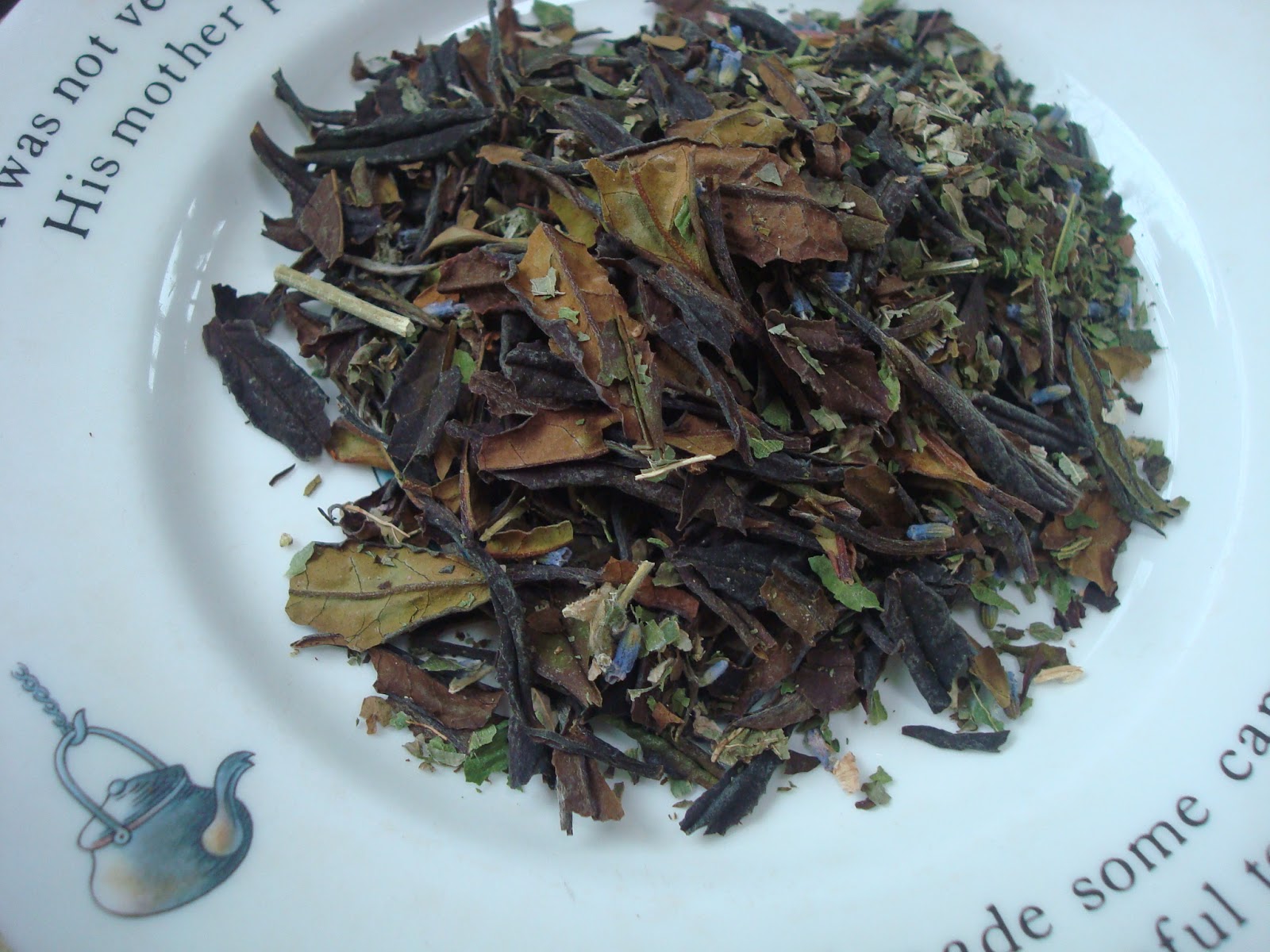
This morning, while browsing the bulk teas at PCC, I saw these new blends for sale and decided to purchase a small amount to review here on my tea blog. I went with the white tea based blend which also contains blackberry leaf, nettle, lemon balm and lavender.


The dry leaf smells like lavender with some sweet grass, and wood notes. I used a heaping teaspoon of dry leaf, 8 ounces of 180° F water, and a medium Finum basket to infuse this blend. The resulting liquor was orange and fragrant. 

I love supporting local food and herb producers and I've enjoyed my past encounters with Sakuma's unmixed tea but this blend is not for me. The tea feels healthy and restorative to drink but it is too sweet and I really do not like the lavender flavor.

As an enthusiastic drinker of pure tea, perhaps I was never the target demographic for this product. I would be much happier to just see unadulterated Sakuma Brother's tea leaves on sale at PCC. That said, I'm sure many folks will think this blend has a great flavor and hopefully these products are finding fans among PCC shoppers. The quality of the ingredients and the wonderful people behind their production and blending makes them a good way to "drink local."

Sunday, September 2, 2012

Sakuma Brother's Washington State Oolong

The Sakuma Brothers farm in Skagit County, Washington State has been growing tasty berries for over 85 years. I first heard about their tea growing experiments about 6 years ago when a coworker at the Teacup purchased a small bag of their white tea at a farm stand. At this time, the idea of growing tea plants in Western Washington was entirely new to me and I was excited to taste the tea. My impression of that tea was poor. It looked and smelled pretty good but the flavor was lack-luster and tasted strongly of raspberries.

Until just 2 days ago, I had not tasted any other tea from the Sakuma Brothers farm but I still tried to keep their operation on my tea-dar. I met Richard Sakuma at World Tea Expo and I could tell that he is a true tea lover and eager to grow and process high quality tea. A year or two later, I heard that Sakuma's tea making skills were getting much better thanks to practice, study and joining a Taiwan tea tour with Floating Leaves. Last week my desire to taste their tea again got the better of me and I ordered a bag of their current Oolong offering.

The dry leaves are brown and green with flecks of silver. They have a mild aroma that reminds me of fresh hot soy milk.


The tea pours a sunny yellow liquor with a fragrance of oranges and hay.


The mouth-feel is light and fleeting with a sparkly texture and the flavor is very nice. It most certainly has berry notes but they are subtle. For me it tasted like a weak, floral, jade oolong brewed with a chunk of tart, unripe strawberry and possibly a leaf or two of rosemary. It is unlike any other tea I've ever had but I would call it complex, interesting and enjoyable. It doesn't have much of an aftertaste (which is, of course, preferable to a bad aftertaste). I would have to say that for the very new world of Washington State tea, this is the best one I've sampled so far. I find that to be very exciting and encouraging!

Tuesday, July 17, 2012

South Seattle Tea Estate - 2012 Harvest Report

As the manager of the South Seattle Tea Estate, I am saddened to inform you that 5-year-old "Leafer," our oldest tea plant, died over the winter. The 3 remaining plants looked scrubby and beaten at the start of spring. For this reason I decided not to make spring 2012 tea.

Summer has been good to our 3 tea plants and they are now, for the most part, looking healthy and producing new leaves.


On July 15, 2012, I decided to make an experimental summer oolong. The harvest took place at 9:00 am. Due to a dearth of tender leaf and bud sets I decided to pluck more mature, lower leaves. In all, I selected 28 leaves for a total of 15 grams. The leaves were arranged in a single layer in a glass baking dish for withering.


After about an hour and a half of withering in the shade the sun broke through the clouds. At this point I moved the dish to the roof of my car for some full-sun withering. The day became quite warm with a nice gentle breeze.


2:00 pm - The leaves were a little bit limp but some bits were too crispy for my liking. Also, some leaves appeared to be getting a "sun burn" so I decided to bring it inside.

3:15 pm - I spent 3 minutes shaking and kneading the leaves.

8:00 pm - I spent another 3 minutes kneading, twisting, shaking and bruising the leaves. I felt like the leaves were getting too dry and brittle so I mounded them up together and covered them with an upside down bowl.

The following morning (today) at 6:30 am - I checked the tea. It had a sweet tobacco-like aroma and a mottled brown and green coloring like camouflage. After ~3 minutes more rolling and kneading. I mounded up and recovered the limp leaves with the same bowl.

9:00 am - I did even more kneading and rolling and then took this photo after which the leaves were then left uncovered.


11:00 am - I baked the leaves for 30 minutes at 250° F in a cast-iron pan. The leaves were mainly in a single layer. I gave them a gentle stir about halfway through baking. The next picture is of my finished tea. It weighed about 5 grams.


I fired up the kettle and placed half of my total harvest into a small gaiwan. My first steep was boiling water for 3 minutes. The color was a lovely golden yellow and the liquor had a sweet smell with notes of raw pumpkin, cooked yam and unlit cigars.


I was trying to make a darker tea, but I was still pleased with the outcome of this experiment. The tea lacked for mouth-feel but it surprised me with complexity. The raw pumpkin aroma stuck with it through 3 infusions but the taste kept changing. It was always brighter and fruitier than I was expecting. I even picked up some guava and nectarine notes as well as a syrupy sweetness.

I'm glad I have enough leaf left over for one more session. I plan to bring it to Phoenix Tea this weekend to share with other tea lovers.

Monday, October 11, 2010

My Latest Batch of Homemade Tea

Last Saturday morning, four tea friends joined me for a cupping workshop class at Teacup. The final tea of that session was my latest batch of entirely homemade and home-grown tea. Please read my prior post if you'd like details regarding its production.

As with my previous batches of homemade tea I was not too sure just what I had created... so I was kind of "flying blind" when I chose my brewing parameters. I decided to use a rounded teaspoon of leaf in a medium sized gaiwan with 190° F water steeped 3 minutes. This yielded 3 decent infusions.


The resulting liquor had a lovely amber color and an unusual aroma.


My fellow tasters and I came up with the following thoughts and opinions about this interesting infusion:

Michael - Squash!
Everybody - Yeah. Big time squash-like taste and smell. Tastes like a garden too.
Me - Sweet, roasty smell like baked winter squash. Slight fishiness and skunky aftertaste? Reminds me a lot of bancha.
Xenia - Not fishy. Doesn't really taste like tea. Not too bad. I've had much worse local tea.
Nicole - It has a little white tea flavor in the finish.

So there you have it. I certainly succeeded in my mission to create a totally unique tea. I think I'll call this strange stuff... "South Seattle Tea Estate's Autumn 2010 Squash Garden Bancha."

Monday, October 4, 2010

Autumn 2010 Harvest Report

The South Seattle Tea Estate's second harvest of 2010 took place on September 30 at 2:00 PM. The afternoon was 69° F and sunny after a cool morning. No tender leaf-and-bud-sets were available so the harvest consisted mainly of very large mature leaves. That was just fine with me because I was determined to make a very different tea than my previous attempts.

In total, I plucked 35 grams of raw leaf from my two tea trees. These leaves were withered outdoors on a pizza pan in mostly full sun until sunset (Exhibit A). They spent the next 2 days inside withering on my kitchen table.

Exhibit A


On October 3rd, I put the slightly limper leaves into a brown paper bag and put them into my backpack to accompany me to the NW Tea Festival. When I got home the leaves had a tiny bit of oxidation appearing around the edges. At 6:00 PM on October 3rd I shook the leaves fiercely inside a glass bowl for 15 minutes (Exhibit B).

Exhibit B


The following morning (today!), the leaves definitely appear darker, redder and limper. They now have a subtle floral scent along with a unique "corn and rosemary aroma" that I always seem to detect in my homegrown tea.

At 8:15, 9:50 and 10:15 AM I rolled the leaves tightly in a cloth napkin (Exhibit C). After each roll I opened the napkin and allowed the limp leaves to rest (Exhibit D).

Exhibit C


Exhibit D


At noon, the leaves were baked (on the same pizza pan from Exhibit A) for 5 minutes at 350° F.

I was hoping to still have slightly limp leaves with some moisture remaining so that I could do another round of twisting and baking, but because the oven was so hot and the leaves were spread thinly and evenly, they emerged from my electric oven bone-dry and crispy!

The huge crispy, twisted leaves were gorgeous, but I doubted they would be able to infuse very well (assuming I could even stuff these giants into a teapot), So at this point I decided that this tea was not meant to look pretty.

I rolled them back up in the cloth napkin and proceeded to give them an "industrial strength twist" (Exhibit E). There was no turning back as the tea leaves snapped, crackled and popped inside the twisting cloth.


Exhibit E


I immediately dumped the now broken leaves into a dry, heavy-bottomed, steel pan over medium heat and toasted them for three minutes while constantly shaking and stirring them. After which I dumped the hot leaves on to a plate to cool down quickly.

Today's 13 grams of finished tea (Exhibit F) is a kaleidoscopic mix of broken leaf bits and stems. It is definitely not as pretty as my previous homemade teas but I believe that I made the right choice by crushing the leaves.

Exhibit F


Any Seattle tea friends want to try this tea with me? I will serve it for the very first time ever to participants in my October 9th tea class (see yesterday's post for details). Only then will I know for sure what I have created and be able to give it a proper name.

Monday, May 3, 2010

My Spring 2010 Tea

One week ago I made 6.5 grams of finished tea from my two backyard tea plants. If you want to read about how it was made click here.

Here's a picture of it:

I thought I was making an oolong tea. Though it is semi-oxidized, I think it is more like a white peony tea. In fact, in many ways, I think I made almost the same tea I made last year... only this time I don't think I baked it long enough because it still had a limp feeling and smelled a bit musty by the time I brewed it. Interestingly, I baked this tea twice as long as I did last year. Maybe this year's tea had a higher water content to begin with? Or maybe (and perhaps more likely) it was the bowl I baked it in this year, which was thicker and deeper than last year's baking dish. It is a good thing I've been taking such good notes. Now maybe if I just start to pay attention to what I'm doing, I can learn from my past mistakes and start to make better tea in the future.

On Saturday morning (5/1/10), my friends David, Gwen, James, Andrew and Chris joined me at Teacup to taste my home grown tea. I chose Vortex to do the honor of brewing my creation. I used all the leaf and started with a 3 minute 190° steep. It was way too weak... but the tasters were complimentary of the brew saying it had potential and a pleasant "tingle" in the mouth.

The second steep was boiling water for 5 minutes. Much better... but still too light. David noted that this infusion had a nice flavor reminiscent of decent quality Assam Indian white tea. He also commented about my tea possessing a certain unique flavor that he has tasted in all of the Washington State teas he has previously sampled.

A photo of the second infusion:


The third steep (10 minutes with boiling water) and the fourth steep (15 minutes with boiling water) were well liked by all tasters. Chris likened the aroma to a brewery he once knew and Andrew spoke of its interesting herbaceous flavors (perhaps from the giant rosemary plant that grows right next to the main tea plant). The fifth infusion (also 15 minutes with boiling water) was pleasant but once again yielded a very weak flavor. After five infusions we called it quits.

In closing, I'd say that this spring's tea was pretty good and that I learned a little bit more about making tea. Hopefully, I'll get another chance to practice in the summer.

It was a very rewarding exprerience to make my own tea completely from scratch!

The beautiful spent leaves:

Tuesday, April 27, 2010

Spring 2010 Harvest Report

The South Seattle Tea Estate's first harvest of 2010 took place on April 26, 2010 at 8:00 AM. The weather was 55° F, overcast and a little bit windy. The actual harvest lasted about 15 minutes and yielded 93 individual leaf-and-bud sets weighing in at 19 grams.

The young, tender leaf-and-bud sets just before harvest.


The total 19 gram harvest.


First the leaves were withered indoors (at around 68° F) in the green stoneware bowl pictured above for 5.5 hours. Then a plate was put over the bowl, to act as a lid, as I shook the leaves very vigorously for 3 minutes. At this point the leaves were uncovered and allowed to oxidize in the bowl for about 16 hours. During this oxidation time, I occasionally mixed the leaves gently and sniffed their developing sweet aroma.

After 5.5 hours of withering and 6 hours of oxidation:


At 5:15 AM on April 27, 2010, I preheated my electric oven to 250° F and baked the bowl of leaves for 22 minutes (mixing once during the bake). After the bake, I transferred the leaves to a cool bowl, then, once the leaves had cooled down, I weighed them. The total yield of finished tea was 6.5 grams. Finally I put my newborn oolong tea into a little glass jar to wait until its debut later this week.

6.5 grams of finished tea:


I am looking for a few tea friends to join me at Teacup on Saturday May 1st at 9:30 AM for a free tasting of my home-grown tea. All are welcome. Please contact me if you'll be able to come.

Saturday, April 3, 2010

Weeds and Buds

On April 1st, my daughter and I went outside to tour the South Seattle Tea Estate (which is located in our backyard). Last May, the tea estate contained only one tea plant, but thanks to my good friend David W. the number of tea plants has doubled!

An aerial shot of the tea estate taken from the back deck.
(The two tea plants are hiding behind the rosemary.)


A close-up of my two tea plants surrounded by weeds.


I'm not sure what caused it, but during the winter, some of the lower leaves had developed a sort of rot or fungus so I had to pick off a bunch of bad leaves.

Yuck!


It was very satisfying to pull out a few of the dandelions that had taken over the garden during the winter.

Die You Vile Weed!


I was very encouraged to see some lovely new leaf and bud sets starting to develop as well as many healthy-looking leaves.

Yum!


Double Yum!


Triple Yum!


In a few weeks I will harvest some of these pretty leaf and bud sets and attempt to make an oolong tea! Stay tuned for a more detailed post about that caper (because I may even host a casual tasting of my finished tea). In the meantime feel free to click here if you would like to read a review of the "Seattle White Peony" tea that I made last spring.

Wednesday, May 20, 2009

South Seattle Tea Estate - Part 2

On the morning of May 14th, my wife and I brewed up all 3 grams of the two-day-old homegrown tea that I described making in my previous post. I am still not quite sure what style of tea I made, but after tasting it and observing the leaves, I've decided to call it "Seattle White Peony" (西雅圖的白牡丹).

The dry leaf has a fairly even mix of oxidation and green bits. It is (if I do say so myself) a gorgeous looking tea.

Steeping in the gaiwan:


Using a 4 ounce gaiwan and 180 degree water, we were able to get 3 good infusions. The tea soup had a light honey-yellow color with a brisk fresh smell. Its unique flavor notes include lilac, rosemary, sweet corn and dry wood. I also picked up a bright grassy taste that reminded me of some first flush Darjeelings. Although it was a refreshing brew, it lacked body and had a slightly weird aftertaste but it was definitely not bad for my first tea making experiment.

Tea soup:


I always get excited when I'm eating homegrown fruits and vegetables, and now I have found the same to be true with tea. I would love to hear some stories from other tea makers, whether you are a pro or just a hobbyist like myself.

The spent leaves:

Wednesday, May 13, 2009

South Seattle Tea Estate - Part 1

Situated among rosemary, sage and four types of blueberries, the south Seattle tea estate is very small. In fact, it currently covers only one square meter of land and contains just one tea bush! The bush, named "Leafer," is of unknown varietal and was purchased for just $12 at the classical Chinese garden in Portland, OR. I believe she is now about 5 years old.

Harvest Time:


Just picked!


At 2:00 pm on May 11, 2009, I hand harvested a small batch of tender new leaf and bud sets. These leaves were then withered indoors for 5 hours before a few minutes of gentle hand rolling. After this rolling step it was oxidized overnight (about 9 hours).

After about three hours of withering
(taken as the sun is just starting to set):


Withered about five hours
(taken as the sun has almost set):


At 6:00 am on May 12, 2009, the tea was electric-oven-baked at 250 degrees for 10 minutes. This spring's crop yielded 3 grams of finished tea (enough for one serving).

At 6:20 am, I examined my freshly baked tea. The long twisted leaves are a beautiful mix of jade green and reddish brown. It had a sugary-lilac fragrance throughout its withering phase, which it still has, but now it's less intense, with an added gentle toasty aroma. At this point the leaves have fully cooled so I've put them in a clay jar to wait until Thursday when I'll have time to drink them with my wife!

My finished tea
(taken during the soft grey light of Seattle dawn):


To be continued...