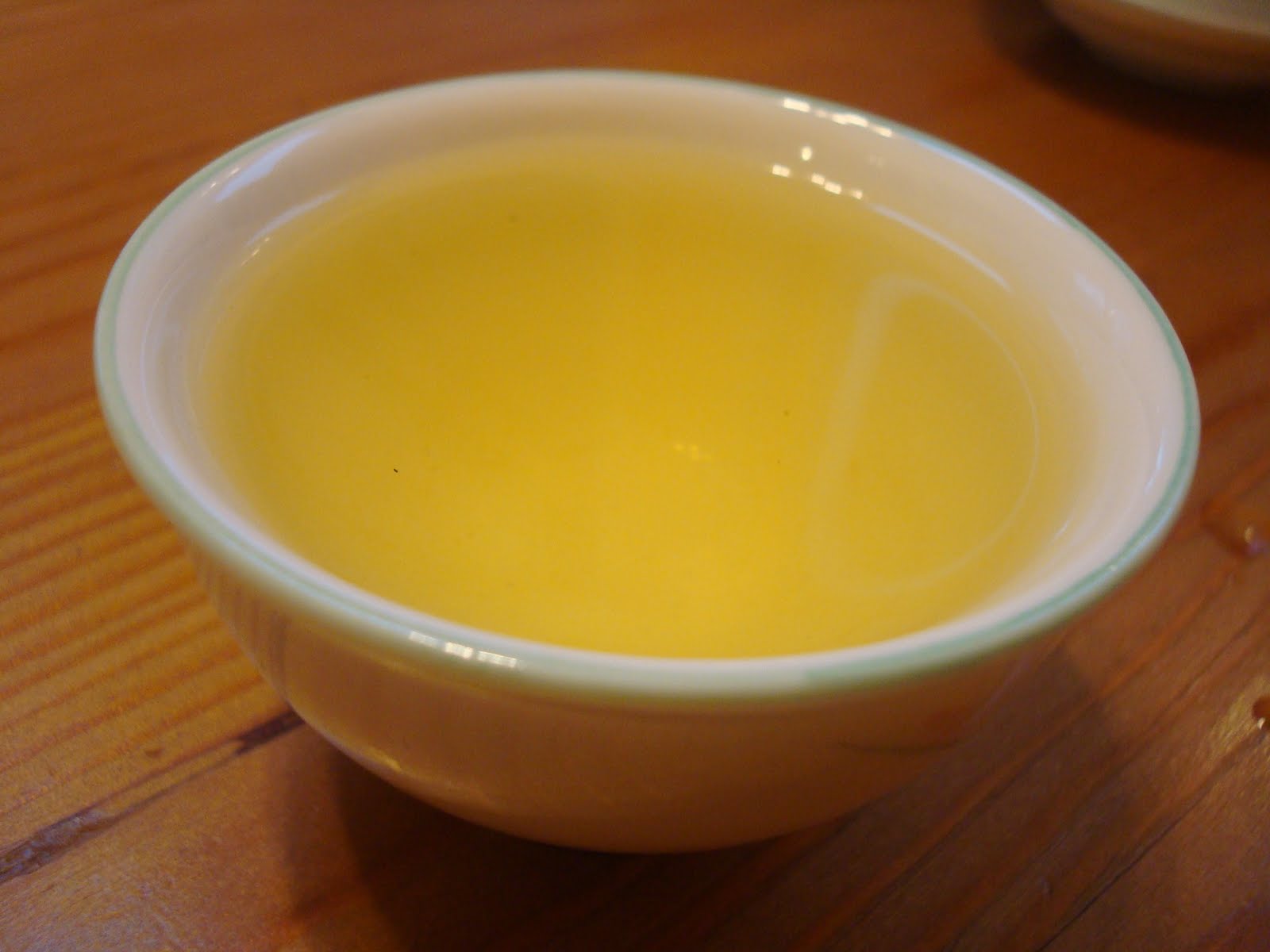
Showing posts with label oolong. Show all posts

Thursday, January 10, 2019

Cupping Two Winter Wenshan Baozhong Teas

Hi Tea Friends! Happy New Year! Long time no see!

I've been doing well. These days I stay busy taking care of my home and family, playing ukulele and guitar, cooking at a busy neighborhood vegetarian cafe, and drinking lots of great tea. I mostly drink oolongs and black/reds, but I'll happily drink some green tea or puer in social settings.

My tea blogging goal for 2019 is a minimum 300% increase in posts compared to 2018. That should not be too hard because I only had one post in 2018! Hashtag "setting the bar low" am I right ?!

Today I cupped up a couple of fresh, high quality, Winter Wenshan Baozhong teas (文山包種茶) from my friend's farm in Pinglin, Taiwan! (Check out my previous post for a photo of my daughter looking out at the very tea bushes these teas were picked from!)

-I'll call them Tea #1 and Tea #2.
-Tea #2 is about 25% more expensive than tea #1.
-Both teas were made by @Pinglin54 in November 2018.
-For each tea I used 4 grams of dry leaf in identical ceramic bowls.
-Water at about 200° F.

Ah! I love that sweet Baozhong fragrance!!! 

Tea #1

... and Tea #2
(I realize they both look pretty much exactly the same :)

Let me just start by singing ♪♫♬♪♫♬ I LOVE WINTER BAOZHONG! ♪♫♬♪♫♬

Both of these teas are superb but they did cup up very differently for me today.

Tea #1 had a grassier, thinner liquor. It was refreshing and crisp with a pleasant honeydew melon aroma, and pine-forest flavor notes. The body was good compared with most Baozhong teas, especially most Spring Baozhong, but it lacked mouthfeel and body compared with #1. It did win for throat-feel though. It left a really wonderful, peppery, sparkly aftertaste in the back of my throat that I didn't get much from #2.

Tea #2, as I just mentioned, was tops for mouthfeel! It was very thick and buttery and much more floral than its less expensive sibling. #2 was also more fragrant off the spoon too. I enjoyed its alluring flavor notes of lilac and mock orange.

In my happy place!

Monday, September 19, 2016

Bitter Melon Tie Guanyin - 苦瓜鐵觀音

Several months ago while drinking tea with my friends Jason and Andrew at Smacha, I received (among other things) a little sample of Bitter Melon Tie Guanyin (苦瓜 鐵觀音) oolong tea.

These days I typically choose either an oolong or a hongcha for my daily brew, and I tend to stick with teas I know. But today I was feeling more adventurous so I decided to give this novelty a try.

I was surprised to find the tea leaves are actually packed into a dried bitter-melon rind shaped like a little bumpy cylinder! The leaves themselves look and smell pleasant. It is a roasted oolong tea.


I used freshly boiled water and gave the "unit" a three second rinse in my gaiwan. It smells quite good, roasty, sweet and mellow.

The first infusion was about 30 seconds and poured pretty light. As you might imagine it took the water a few infusions to get into the center of this "wheel of leaves" and start to push the real flavor out. I continued to do short steeps because I was afraid of the bitterness that actually never came. After the second infusion, with the leaves pushing their way out of the melon rind, the liquor turned a medium-dark amber color. I enjoyed the flavor but it does have a weird vegetable note. The sweet caramel-like oolong flavors are muddied up by a tart cucumber-skin aftertaste. 


After 15 years as a heavy tea drinker I have a pretty good understanding of what my body craves. I drink tea for the satisfied feeling it gives me, the flavor, and the energy (qi) (). Maybe it's because I do not have any sentimental connections to bitter melon or it's potential health benefits that I found that this tea was ultimately not worth my time.

Monday, January 11, 2016

New Winter Baozhong!

Last week I treated myself to a couple ounces of Winter 2015 Wenshan Baozhong (文山包種茶) tea from Phoenix Tea in Burien, Washington. Today I'm trying it for the first time.

Beautiful, fragrant dry leaves.

For this session I used ~7 grams of dry leaf in my 100 ml gaiwan and freshly boiled spring water. Water was full boil (or very close to it).

You know how sometimes a cup of very fresh tea seems to sparkle with all those essential oils floating on the surface? This tea has lots of that, which I love!
 

The mouth-feel is thick and amazing. I can feel the tea coating my tongue and lips. The fragrance notes are: blossom, awesome, yum, and plum. My tasting notes are: clean, green, and nectarine. When the winter days are particularly dark and drizzly this tea will bring me a lot of good cheer. 

Friday, March 14, 2014

Dancong Haiku

Old tree with deep roots,
red halo on twisting leaves,
like sipping honey.


Friday, April 12, 2013

New Taiwanese Tea at Phoenix Tea

Lately we have been in Taiwanese tea heaven at Cinnabar's and my tea shop Phoenix Tea. Please allow me to take you on a little tour of my current favorites.

Shan Lin Xi Long Feng Xia (杉林溪龍鳳峽) - This winter oolong is very complex. It blends wild herbaceous tasting notes such as cedar, pine, and rosemary with clean winter snow and dynamic floral bouquets. A pleasant long-lasting tingly sensation lingers in the back of my throat after a long session with this fine tea.


High Mountain Jin Xuan (高山金萱) - This winter tea uses the golden lily cultivar and produces a luscious, sweet and buttery cup of oolong tea. It is floral with little hints of popcorn. The broth is very smooth and substantial.


Lishan (梨山) - This winter Lishan is beyond compare. We've already restocked it once because so many tea lovers have fallen for its charms. Tasting notes of sugarcane and crisp tart fruits are balanced with buttery, wild honeysuckle aromas. The sweetness lingers for hours.


Dong Fang Mei Ren (東方美人) -  This Pinglin (坪林) grown Dong Fang Mei Ren may taste a little lighter, brisker and smoother to you if you're more used to drinking Hsinchu grown Dong Fang Mei Ren. I think this tea is incredible and balanced with big honey and ripe peach notes in most infusions. It has a long-lasting sweet, brisk aftertaste.


Meishan Hongcha (梅山紅茶) - This fully oxidized high mountain tea is flat out amazing. It blends brisk and malty classic black tea flavors with alluring aromas like rose and cocoa.


Jin Xuan Hong Cha (金萱紅茶) - A heavily oxidized tea that expertly combines all the goodness of a black tea, gently roasted oolong, and a buttery caramel. The resulting delicious-ness has made this tea very popular among many of our in store customers.


Sunday, September 2, 2012

Sakuma Brother's Washington State Oolong

The Sakuma Brothers farm in Skagit County, Washington State has been growing tasty berries for over 85 years. I first heard about their tea growing experiments about 6 years ago when a coworker at the Teacup purchased a small bag of their white tea at a farm stand. At this time, the idea of growing tea plants in Western Washington was entirely new to me and I was excited to taste the tea. My impression of that tea was poor. It looked and smelled pretty good but the flavor was lack-luster and tasted strongly of raspberries.

Until just 2 days ago, I had not tasted any other tea from the Sakuma Brothers farm but I still tried to keep their operation on my tea-dar. I met Richard Sakuma at World Tea Expo and I could tell that he is a true tea lover and eager to grow and process high quality tea. A year or two later, I heard that Sakuma's tea making skills were getting much better thanks to practice, study and joining a Taiwan tea tour with Floating Leaves. Last week my desire to taste their tea again got the better of me and I ordered a bag of their current Oolong offering.

The dry leaves are brown and green with flecks of silver. They have a mild aroma that reminds me of fresh hot soy milk.


The tea pours a sunny yellow liquor with a fragrance of oranges and hay.


The mouth-feel is light and fleeting with a sparkly texture and the flavor is very nice. It most certainly has berry notes but they are subtle. For me it tasted like a weak, floral, jade oolong brewed with a chunk of tart, unripe strawberry and possibly a leaf or two of rosemary. It is unlike any other tea I've ever had but I would call it complex, interesting and enjoyable. It doesn't have much of an aftertaste (which is, of course, preferable to a bad aftertaste). I would have to say that for the very new world of Washington State tea, this is the best one I've sampled so far. I find that to be very exciting and encouraging!

Tuesday, July 17, 2012

South Seattle Tea Estate - 2012 Harvest Report

As the manager of the South Seattle Tea Estate, I am saddened to inform you that 5-year-old "Leafer," our oldest tea plant, died over the winter. The 3 remaining plants looked scrubby and beaten at the start of spring. For this reason I decided not to make spring 2012 tea.

Summer has been good to our 3 tea plants and they are now, for the most part, looking healthy and producing new leaves.


On July 15, 2012, I decided to make an experimental summer oolong. The harvest took place at 9:00 am. Due to a dearth of tender leaf and bud sets I decided to pluck more mature, lower leaves. In all, I selected 28 leaves for a total of 15 grams. The leaves were arranged in a single layer in a glass baking dish for withering.


After about an hour and a half of withering in the shade the sun broke through the clouds. At this point I moved the dish to the roof of my car for some full-sun withering. The day became quite warm with a nice gentle breeze.


2:00 pm - The leaves were a little bit limp but some bits were too crispy for my liking. Also, some leaves appeared to be getting a "sun burn" so I decided to bring it inside.

3:15 pm - I spent 3 minutes shaking and kneading the leaves.

8:00 pm - I spent another 3 minutes kneading, twisting, shaking and bruising the leaves. I felt like the leaves were getting too dry and brittle so I mounded them up together and covered them with an upside down bowl.

The following morning (today) at 6:30 am - I checked the tea. It had a sweet tobacco-like aroma and a mottled brown and green coloring like camouflage. After ~3 minutes more rolling and kneading. I mounded up and recovered the limp leaves with the same bowl.

9:00 am - I did even more kneading and rolling and then took this photo after which the leaves were then left uncovered.


11:00 am - I baked the leaves for 30 minutes at 250° F in a cast-iron pan. The leaves were mainly in a single layer. I gave them a gentle stir about halfway through baking. The next picture is of my finished tea. It weighed about 5 grams.


I fired up the kettle and placed half of my total harvest into a small gaiwan. My first steep was boiling water for 3 minutes. The color was a lovely golden yellow and the liquor had a sweet smell with notes of raw pumpkin, cooked yam and unlit cigars.


I was trying to make a darker tea, but I was still pleased with the outcome of this experiment. The tea lacked for mouth-feel but it surprised me with complexity. The raw pumpkin aroma stuck with it through 3 infusions but the taste kept changing. It was always brighter and fruitier than I was expecting. I even picked up some guava and nectarine notes as well as a syrupy sweetness.

I'm glad I have enough leaf left over for one more session. I plan to bring it to Phoenix Tea this weekend to share with other tea lovers.

Monday, January 16, 2012

Oolong Brewing Video

This is a short video of me brewing Shan Lin Xi High Mountain Oolong Tea (杉林溪高山烏龍茶) at Phoenix Tea in Burien, Washington. It was filmed by my business partner Cinnabar a couple days ago.

Brewing Taiwanese Oolong from Cinnabar Wright on Vimeo.

Monday, November 7, 2011

Aged Wenshan Baozhong

I was lucky to visit Red Blossom tea company back in 2007. One of several treasures that I purchased during that trip was their Aged Wenshan Baozhong oolong tea. I was told that it was made in the "early 80's."


I was curious to know if they still had this exact tea in stock so I emailed their customer service department. I quickly received an informative response from Red Blossom's Peter Luong.

He wrote:

"When we made the original purchase of the 1980's Aged Wenshan, there were two distinct batches. They were similar age range and from the same source. The appearance of the leaves were slightly different but nearly identical in character/taste/aroma. I think we were working off the first batch when you made the original purchase, and have gone on to the second batch."

So it sounds like you can't actually buy this tea that I'm about to review. Oh well. I'm going to write about it anyway.

I filled my small gaiwan ~half-full of dry leaf and gave it a 3 second rinse with boiling water. The fragrance off these damp leaves was breathtaking. It smelled earthy and roasty with luscious brown sugar and raisin notes.

I was surprised by the dark color of the liquor. It looked a little bit like a cup of Da Hong Pao oolong.


The richness of this tea was deep and mystifying. As I sipped, I felt soothing energy spreading down through my shoulders, arms and hands. It presents subtle wine notes like oak, plum and blackberry along with fire notes such as wood and charcoal.

This tea is complex, full-bodied and slightly sweet. It is very much what I'm drawn to these days.

Wednesday, November 2, 2011

Cupping 2005 & 2006 Wenshan Baozhong

Six and a half years ago I set aside ~4 ounces of fresh spring 2005 Wenshan Baozhong (文山包種) tea in a tall mason jar with a screw on lid. One year later I did the same with my 2006 Wenshan Baozhong, but this time I used a shorter jar with a rubber gasket lid.

Since that time the leaves have been stored in the dark corner of a bookshelf, behind a curtain, along with my humble puer collection. I have only opened them once, a few years back, to take a little sniff.

Today will be the first time I've cupped them since they were new.

2006 (left) and 2005 (right)


I chose two identical glass mugs for this cupping. In each mug I used 2.5 grams of leaf and 80 ml of boiling water. I sipped directly from the mugs and added more water several times.


I realize that today's cupping will provide me with very little useful information. This is because I do not have any notes or memories (except the notion that they were once really good) about how these two teas originally tasted. So today I will just describe my impressions so that I'll have a useful "baseline" a few years later when I decide to repeat this cupping.

The dry leaves look similar but I noticed a few more woody stems in the 2005. The 2006, on the other hand, had a few more broken leaves. For both teas, the aroma off the dry leaves is muted and underwhelming. The 2005 reminds me a little bit of stale graham crackers and the 2006 reminds me of stale graham crackers in the grass.

The flavor of 2005 was slightly darker and earthier and its aroma was a bit mustier. It was still a little bit floral and had a nice thick mouth-feel. I also perceived a soft ocean flavor in this tea.

In contrast, the 2006 drank much more like a new tea. It had a delightful lilac aroma and a crisper medium-body with buttery notes. Perhaps the rubber gasket sealed in more freshness?

Both teas were long lasting and soaked for hours without bitterness. All in all I was pleasantly surprised by the taste of these two teas.

Although these two specimens are both spring Wenshan Baozhong teas from Pinglin, Taiwan they really have little else in common. They were made at different times by different people on different farms. But now they share the same fate. I'll now put them back in their little hide-away to await the next cupping.

Friday, September 9, 2011

Anxi Rougui Oolong

Today I'm reviewing an interesting oolong called Anxi Rougui. Anxi is the name of a county (famous for Tie Guanyin / 鐵觀音) in China's Fujian province. Rougui (肉桂), which means cinnamon, is a tea plant cultivar. My business, Phoenix Tea, is the primary American source for this tea.

I've had several wonderful experiences with Rougui oolong from the Wuyi mountains. Those teas were all darker and more heavily roasted teas with long twisted leaves. This tea, on the other hand, looks like a greener Tie Guanyin.


Despite its greenish color, the dry leaf smells rich and roasty with a promising hint of cinnamon aroma.

The brewed liquor is also a bit darker than I would have guessed and very sweet smelling. It reminds me of when I make granola and the whole house smells amazing all day.


The flavor is satisfying and toasty. At first it struck me as a somewhat savory, herbaceous Tie Guanyin-like tea. It lacks slightly for body but it makes up for it with great complexity. The strong cinnamon-like notes don't hit me right away, but instead they wait until I've taken a breath after each sip. At that point there is a distinct icy-hot cinnamon sensation in the very back of my mouth and tongue.


I'm really enjoying this tea and look forward to drinking it more often in the Autumn.

Wednesday, August 24, 2011

Phoenix Dancong Aha Moment

I'm not sure where the term originates but according to psychologist John Kounios an Aha Moment is: "Any sudden comprehension that allows you to see something in a different light."

I had my first Tea Aha Moment with my mentor Donna Fellman back in 2001. Since that day I've had many of these little epiphanies for many different types of tea.

I've always been intrigued by Phoenix Dancong (鳳凰单丛) oolong tea but I never really understood why some folks are crazy for it. The 2007 Winter Fenghuang Wudong old bush from Hou De almost qualified as an Aha Moment, but because that particular tea was so unique I could not compare it to a normal Phoenix Dancong.

Normal (by which I mean "commercially available in North America") Phoenix Dancong, in my experience, has those beautiful, carefully twisted leaves...

...like this...


...and appears slightly red and green after it has infused many times...

...like this.

Their are so many different cultivars used to produce them. One of the most common is called Milan Xiang (蜜蘭香) (Honey Orchid Fragrance). I've had a few nice experiences with these teas, but they've never satisfied me the way a good Taiwanese High Mountain Oolong, Ti Kuan Yin (鐵觀音) or Yan Cha (岩茶) could.

My Phoenix Dancong Aha Moment finally came earlier this month while taking care of my kids and doing household chores. I was drinking the Phoenix Dancong that my own tea company is selling. I used a small gaiwan about 2/3 full of dry leaf and steeped the first couple infusions for about one minute. It was very pleasant.

Then I made my 3rd infusion. I forgot about it. It steeped almost 20 minutes and I was sure it would be terrible.

But it wasn't!

I liked that cup of tea so much! The flavor was really rich and presented big apricot and honey notes. It felt so thick and malty with bright, sparkly peaks of complexity. I instantly knew why people love this type of tea so much.

Since that Aha Moment I have tried hard to learn how to coax those delicious flavors into every infusion.

It hasn't been easy but I have found a happy balance. I tend to like this Dancong better with longer steeps. I also prefer using spring water or plain tap water instead of my usual filtered water. Finally, I recommend using slightly cooler water, (around 180° F) after the 3rd infusion, and not giving up on the tea until at least the 7th because my favorites seem to be the later infusions.

Friday, June 24, 2011

Three Grades of Spring 2011 Baozhong Tea

Yesterday, I cupped three grades of Spring 2011 Wenshan Baozhong Tea (文山包種茶) produced by my buddy Amin (and his family) in Pinglin, Taiwan. If you read Chinese (unlike me) and/or if you'd like to see videos of Amin making tea with his family, here is the link to his blog.

For this post, I will call the teas C (lowest grade), B (middle grade) and A (highest grade). I've tasted A a few times already on its own and I really like it, but I've never tried B and C before this cupping. According to Amin, these teas were picked in mid-May using the qing xin (清心) tea plant (which is common in Pinglin for Baozhong tea), and pass SGS tests for pesticide residue.

I set up a "more casual than usual" cupping station and then measured out 5 grams of dry leaf for each tea. I used spring water at a full boil.

C (top left)
B (top right)
A (low middle)


I was very pleased that my tasting notes and Amin's descriptions were analogous. Not that I ever expected otherwise. He has earned my trust over these last 4 years by always selling me great tea at a fair price.

This was a very pleasant cupping indeed (wish you could have been here). The window was open and the cool misty morning breeze filled the house with delightful garden aromas. I poured into each cup and then just put my nose in real close. Ahh.

C was nice... but when it was compared to the other two teas it didn't stand a chance. It came across as grassy and bright with fleeting fragrance and weak body.

B was the creamiest. It also appeared to be a little heavier oxidation. Great texture, even a little bit better than A, but lacking for aroma. It had a nice ripe honeydew melon note.

A: This tea was the king for floral fragrance, yielding lots of sweet lilac and mock orange blossom notes. The liquor felt thick and buttery with many wonderful pine, fruit and herbal notes.

PS: I have about 12 ounces left of A and I'd really love to place it in good homes (for $10 per ounce). If you and your teapot (or gaiwan, I don't discriminate) are looking to adopt some Baozhong tea (or Spring 2011 Alishan Zhang Shu Hu for that matter), please email me at blackdragontea@gmail.com

Wednesday, June 8, 2011

Spring 2011 High Mountain Oolong Sale!

Hello tea friends. I have some Taiwanese oolong for sale! Three spring 2011 high mountain oolong teas arrived at my home yesterday from my mentor and friend Penny Yang in Taipei.

The three teas are: Alishan Zhang Shu Hu (阿里山樟樹湖), Meishan (梅山), and Shan Lin Xi Long Feng Xia (杉林溪龍鳳峽). I cupped them all together this morning.

Shan Lin Xi is on the left,
Alishan is in the Middle,
and Meishan is on the Right.


Here are my tasting notes from this morning's cupping session:

Alishan Zhang Shu Hu: The most buttery and floral. Savory and sweet with notes of apple and wild herbaceous dandelion. In the middle for body.

Meishan: The brightest and greenest of the three. Refreshing and crisp. Sugary with lingering orange rind and other fruit notes.

Shan Lin Xi Long Feng Xia (sorry this tea SOLD OUT on 6/9/11 ): Toastiest with thickest body and mouth-feel, a little bit floral with notes of almond, earth and meadow grass.

In my opinion these three teas are all very wonderful and unique and they all have great aftertastes. I am so happy to once again have some fresh high mountain oolong in my house!

I am selling these teas for $12.50 per ounce. Shipping to the lower 48 states adds $5 (more for other places). Of course you can skip the shipping if you arrange to pick the tea up from me at my home or work.

If you're interested in buying some tea from me please email me at blackdragontea@gmail.com. I can be paid via paypal, cash or check. Thanks!

Wednesday, May 11, 2011

Organic Winter Shibi Oolong tea

My friend Nicole (the same generous, globe-trekking tea lover that gave me the Indonesian Teh, Ba Bao Cha and Tibetan tea) has recently started her own tea business called Green Leaf Tea Company.

Today I'm going to review one of her new offerings called Organic Winter 2010 Shibi (石壁) Oolong tea.

Shibi is a small township in Taiwan's Yunlin (雲林) county where the organic tea farm is located. Last year Nicole spent a little time working on this farm, so it could be said that she helped care for the plants whose leaves I'm now drinking!

Here is what Nicole says about this tea: "The small family owned farm is nestled in the mountains near Alishan near the Gu-keng township of Yu lin county. The tea is grown at 1,500 meters, and is Taiwan Agriculture and Food Traceability System Certified (TAP - Taiwanese certification). Their farm does not have organic certification because of the cost (because are a small family owned farm many can't afford the certification). However, she does follow organic practices and uses no pesticides (which I can personally attest to). This farm is the only one in her immediate tea growing area, and thus is trying to set the example to her neighbors." I'm hoping to learn more about all of this and read some of her travel stories when she begins writing her own tea blog.

The dry leaves are vibrant, green, and beautiful with lots of long fat stems. They have a delicate floral pine forest aroma.


I was lucky enough to be given about an ounce of this tea, so I had a little wiggle room to experiment with different brewing methods. What I came to learn, at least for my own taste, is that this tea likes it hot. First I tried it in a bowl with a spoon and it was awesome with lots of fragrance, then I tried it in a glass gaiwan but it was lackluster and I just couldn't coax out all of the aroma or the mouth-feel that I wanted. Then I tried it in a small thick clay teapot set within a bowl of hot water with boiling hot water used for every pour, and it was truly transcendent. It makes since to me that this tea would like such hot water because these leaves are so thick and strong.

I poured 8 wonderful infusions each with a nice, complex, heady, floral, aroma. My tasting notes included: sugarcane, rose, bamboo, coconut milk and nectar. I really enjoyed this tea and I'm still enjoying its aftertaste hours later.


Nicole is currently selling this tea ($6 for 25 grams) and welcomes any orders or queries at greenleafteabar@gmail.com

She also gave me a sample of a Summer 2010 Hong Cha made on the same tea farm which I'll be reviewing soon!

Thursday, January 13, 2011

Floating Leaves' Winter 2010 Lishan

Last week I treated myself to a belated Christmas gift. I bought a couple ounces each of Floating Leaves' new Winter 2010 Lishan High Mountain Oolong (梨山高山烏龍) and Winter 2010 Honorable Mention Wenshan Baozhong (文山包種). This was the first time I'd purchased some tea just for myself in a very long time. Today I'm going to review the Lishan.

I covered the bottom of a small gaiwan with dry leaf and then whipped it up into a "tea cyclone" with boiling hot water. I did not rinse the leaves. After about 50 seconds I decanted my first infusion.

the first infusion


The liquor poured thick and yellow with a delicate floral aroma. My mouth began to water. I haven't had great high mountain oolong in over 6 months.

the third infusion


I really love this tea and I feel like its price ($15 per ounce) is just fantastic for its level of quality in the current North American retail market for seasonal Taiwanese oolong.

My tasting notes during the first 6 infusions included: sugarcane, crisp tart pear, nectar, substantial broth, delicate sulfur aroma, buttery, honeysuckle, and dandelion. My notes for the final two infusions were: thinner broth with delicate pine and rosemary notes.

the spent leaves


The aftertaste lingered all day and I am now one happy oolong drinker. Thanks Shiuwen!

Wednesday, September 29, 2010

Da Hong Pao for Sale

Last week I received a couple kilos of high quality Da Hong Pao (大紅袍) (big red robe) oolong from my vendor/online-tea-friend Mr. Daniel Hong (of Yun Xiang Tea Company).

Mr. Hong told me that the tea was produced May 1st to 3rd, 2010. He described the farmer as: "...not rich but looks very happy every day, has too many kids, maybe because he is not good at business so although his tea is very good he still doesn't get rich. His price is very fair, more fair than others I know. I'll visit him few days later. As he said 'keep simple, keep happy'."

Currently that is all I know about this particular tea but I'm sure that if you have some other specific question about it, Mr. Hong will be able to answer them for us.

Here is my review of this tea:

The dry leaves are mainly dark brown but when you look at them closely you can also see flecks of light brown and gold. To me these long twisted leaves have a "happy-making" aroma with notes of charcoal, coffee and baked sugar.


The liquor is full bodied and redolent. It has a smooth baked tea flavor that teased notes of cookies, maple syrup, blueberries and whole wheat raisin bread. A ten infusion session left me feeling peaceful, mellow and pleasantly hungry.


I am very happy with this tea and plan to serve (and sell) it at my Chinese Tea Party on October 17th. I also hope to sell some of it to any online tea friends who are currently hunting for some really satisfying Wuyi Mountain (武夷山) oolong tea. My cost is $15 per ounce and shipping is $5 to the continental US (more for other places). A small free sample is available for certain people who ask very nicely. Payments can me made via cash, check or paypal. Please email me at blackdragontea@gmail.com for more information. 謝謝您! Thank you!


Tuesday, September 21, 2010

1725 Tie Guanyin

A few months ago, I gave a nice couple a little bit of puer tea. Unexpectedly, the couple returned the favor a few weeks later by gifting me a very cool looking tin of Tie Guanyin (鐵觀音) oolong tea that a friend had recently brought them from China. It was called "1725 Tie Guan Yin" and it had a lot of interesting Chinese text and a map of Anxi county printed on the tin.

The tin.


I decided to use my preschool-level Mandarin skills, a magnifying glass, and a couple of favorite websites (MDGB and NCIKU), to translate all of the Chinese text on the tin (even though I knew it would probably take me a few hours). During my time translating, I thought... "This is so cool. I'm going to learn so many fascinating new things about Tie Guanyin tea!"

Here's what I came up with. (Any of my Chinese-literate followers are invited to correct my translations or offer more details in the comments.)

安溪縣位於福建省的東南部,晉江西溪上游, 北緯 24° 50'〜25° 26',東經 117° 36'〜118° 17',地外南廈(門)漳(州)泉(州)金三角合部,居山而近海,隸屬歷名城泉州市。它東接南安縣,西連華安縣,北鄰永春縣,西南與長縣接壤,西北與漳平 縣交界。東西長 74公里,南北寬 63公里,面積 3057.28平方公里。縣境呈圓形,佮稱“一塊碟”,是泉州市地域最大的縣。
I gather that this is all just highly technical information about the geographical location of Anxi County.

介於綠茶和紅茶之間屬於半發酵茶類.
Semi-fermented [oxidized] tea is between green tea and black tea. (Well duh.)

福建安西勞動人民在清雍正三年至十三年(1725年至1735年)創制發明了青茶,首先傳人閩北後傳人台灣省。
Workers from Fujian province's Anxi county first invented this process between 1725 and 1735 (during Emperor Qing Yongzheng's rule), and they taught it to the "north of Min river" folks who moved to Taiwan.

So that was all it said on the tin!? I felt a little bit like Ralphie in "A Christmas Story" when he finished decoding Little Orphan Annie's secret radio message... and all it said was... "Be sure to drink your Ovaltine."

Anyway... I suppose it's time I got down to business and actually reviewed the tea.

This "1725 Tie Guan Yin" is from the Fujian Horizon Tea Co. Ltd. I could not figure out when the tea was made.

The leaves were packed not only in the lovely and collectible tin pictured above, but also in small single-serving vacuum sealed bags (which is fairly common). What I did not expect to find was another layer of plastic bag inside the first. Now that's a lot of packaging! I wonder if the tea inside will live up to all its packaging... or if this is all just a plot to sell mediocre tea to tourists. I was starting to worry as I opened up the second layer of plastic.

Here's what I found.


I was a little bit disappointed because I was hoping to find a roasted tea and it turned out to be a lightly oxidized TGY. Oh well. I poured the leaves into a large gaiwan and gave the tea a 3 second rinse with boiling water. It had a nice "minty-cheesecake" aroma.

My first two infusions were deemed "not offensive." Perhaps I had brewed them too weak because the broth was pretty dull.

The tea came alive for infusions three, four and five. It yielded a great yellow color with a few little sparkles on the surface. These infusions had peppery pine and mineral notes balanced by a touch of tropical flower aroma. They also had decent body. The sixth and seventh infusions fell flat and at times presented a little bit of bitter tobacco taste.

The third.


The leaves.


I like Tie Guanyin oolong tea quite a bit; in fact, one of my first experiences with premium Chinese tea was an unforgettable baked TGY that my mentor Donna Fellman shared with me almost nine years ago. That being said, I have always been a little wary of TGY oolong because I seem to have had just as many lackluster experiences as good ones.