Showing posts with label organic tea. Show all posts

Thursday, April 30, 2015

Mauna Kea Tea's 2015 Green Tea

Last week I received a half ounce of fresh green tea from Mauna Kea Tea Company on the big island of Hawaii! Since my first post about this wonderful family farm five years ago, I've only tasted their teas a couple times, but I often think about them and enjoy following them on facebook and reading about Hawaiian tea production on their blog. Today I will share my review of their new 2015 Premium First Flush Green Tea.

The dry leaf of this green tea is really beautiful. It is made up entirely of long, twisted, leaf-and-bud sets with flecks of jade green, forest green, and silver. It smells fresh and sweet. A nice toasty aroma remains from the pan firing. 


For this cupping I used a large pinch of dry leaf, 165º F spring water, and a 1 minute steep in my glass gaiwan (steep time increased slightly with later infusions). The tea liquor is pineapple-yellow with a thick body and grassy fragrance.


I poured eight awesome infusions of this green tea. My notes bounced all around including herbaceous, floral, buttery and vegetal notes. This is my kind of green tea, it's complex and refreshing with a smooth and substantial mouth-feel. If you've never tasted Hawaiian grown tea I can think of no better place to start than this green from Mauna Kea Tea company.   

Wednesday, July 11, 2012

Organic Tea in Mucha

In January of 2010, I spent a lovely afternoon with two friends hiking around the Mucha (木柵) area of Northern Taiwan. During the hike I was delighted to see many small tea farms growing organic tea. I also saw a great mix of native plants, bamboo, herbs, trees and shrubs in the area.

Wild areas near the trail.


Newly transplanted bamboo.


A newly planted grove of tall bamboo.


Strolling among the tea bushes.


Nitrogen fixing cover crop sown between rows.


This plant looked different from the others and had recently endured quite a bit of nibbling. The flower is bigger and fancier too. Perhaps this is more of an ornamental tea plant?


This is a much more traditional looking tea flower in my experience.


Spiders webs are wonderful things to see among healthy tea plants.

Monday, July 11, 2011

DoMatcha's Organic Ceremonial

Last week my good friend and former coworker Tiffany P. asked me if I'd like to review DoMatcha's Organic Ceremonial tea on my blog. I've had a couple of great experiences with DoMatcha's products in the past at World Tea Expo so I happily agreed. Just two days later a can of tea and a new bamboo whisk (aka chasen) appeared at my door!

You may already know this (but it bears repeating) in order to taste good, matcha must be prepared well. It really takes skill, and that means a lot of practice. I'm by no means a skilled matcha whipper. I've only had a couple of short tutorials and seen a few videos. I don't drink matcha very often but I am lucky to already possess a very nice Japanese matcha bowl and chasen.

This morning I set up a serene matcha tasting under my cherry tree. As I opened the can I was delighted to find a small red booklet explaining matcha preparation waiting under the lid. Very classy.

The tea smells fresh and has a lively green color. I'll try my best to whisk it well!


I used two scoops from my bamboo matcha scoop (aka chashaku) and a few ounces of 190° spring water. I whisked as smooth and quick as possible in a zig-zag pattern for about 20 to 25 seconds until it looked like this:

Wide shot:


Close up:


The tea has a heady, sweet aroma and felt rich and substantial in my mouth. The texture was not at all chalky. My tasting notes included green banana (in a good way), and sugar snap pea. My daughter, who has never tried matcha before, took one small sip and stated that "Drinking matcha tea makes me feel like a sweet apple." (It should be noted that she is three years old and happened to be eating an apple at the time.)

I don't claim to have a well developed palate for matcha tea but I'd rank this one as very good.

Monday, June 13, 2011

Organic Summer 2010 Shibi Hong Cha

I teased a review of this organic Taiwanese hongcha (紅茶) at the end of my May 11th post. I would have posted this review sooner but I only had a small sample and I used too large of a teapot. The resulting tea was way too weak to fairly review and so I had to wait until my friend Nicole of Green Leaf Tea Company got her new shipment from Taiwan. Now that that has happened I'm ready to sip and share!

The dry leaf is slightly twisted and dark with little flecks of gold and fat twigs. The aroma is nutty and sweet with a slight note of potato chips.


This time, determined not to be "under-leafed," I brewed it in a small gaiwan about 60% full of dry leaves. This method yielded 6 tasty infusions.

Here's the third:


But even when brewed in this heavier manner, the tea was still pretty light when compared to most hongcha I have sampled. Despite its lighter body the tea did not lack for complexity. It sometimes yielded a pleasant, creamy caramel-like flavor, and sometimes it had a wonderful brisk, Ceylon-like, raisin flavor.

This tea is very smooth and yummy but it did occasionally display some distant savory, broth and marine notes. The only other time I can remember detecting this particular flavor was in the stunning Summer 2009 organic A'a black tea from Hawaii's Big Island Tea Company. Interestingly, I just read Alex Z's Chicken Soup Aroma in Black Tea post from earlier today and I think that was maybe what I was tasting. Possibly it's perceived differently to me because I've been vegan for almost 12 years?

For me this tea was at its best when it had cooled to room temperature. For some reason the cooler liquor tasted thicker and really appealed to me with its clean, fruity, and refreshing taste.

I'd recommend this Summer 2010 Shibi hongcha to anybody looking for a smooth, light and spirited black tea and/or to anybody who (like myself) wishes to support small-scale organic tea production in Taiwan.

Click here if you'd like to see the vendor's own review of this tea.

Tuesday, June 7, 2011

My Thoughts on Organic Tea

I don't really like the term Green guilt. To me, it is just an ostentatious way of saying "conscience." Everybody has a conscience and everyone (at least everyone I know) wants their food, drink and environment to be clean, healthy and natural. To that end, we try to make sustainable choices.

I'm confident that I'm doing a fair job but I'm far from perfect and I'll never be perfect. Being perfect and feeling guilty is not what life is about. Life is about loving, growing, making mistakes, learning, and evolving.

How does this relate to tea? Like anything we humans choose to consume, this issue is extremely complex and very personal. Many teas are as good as organic but not certified, while others (thankfully very rarely) may have fake organic certifications. Sometimes organic teas don't taste half as good as non-organic teas but they cost twice as much. Other times organic teas are worth every penny. The truth is that most tea is primarily a cash crop being produced on high yield mono-crop tea estates. Because of this, I find myself always on the lookout for more sustainable tea growers. These growers usually turn out to be dedicated and caring farmers with low yield farms... and their tea is often very amazing and more expensive. I would love to be able to drink these sorts of teas all the time, but the fact remains that I still drink a lot of non-organic tea. I drink all types of tea from all types of places and I like it that way. I believe that quality, non-organic tea from reputable tea vendors is a healthy and sustainable choice (especially when it's compared to some of the other things we humans chose to eat and drink).

For any readers who came to this post looking for real insights based on objective research (not always my strongest suit) I urge you to read the following articles which helped me on my own path:

"Organic Tea" by the good people behind RateTea.net

"Sustainable, Organic, Fair-Trade: A Conversation with Nigel Melican / Parts 1, 2 and 3" [Chadao blog] by Cinnabar

"Discussions on Organic Cultivation of Tea / Part 1 and 2" [Life in Teacup blog] by Gingko

Further Discussions of Quality" [The Leaf, Issue #7] by Thomas Leons and Wu De

Wednesday, May 11, 2011

Organic Winter Shibi Oolong tea

My friend Nicole (the same generous, globe-trekking tea lover that gave me the Indonesian Teh, Ba Bao Cha and Tibetan tea) has recently started her own tea business called Green Leaf Tea Company.

Today I'm going to review one of her new offerings called Organic Winter 2010 Shibi (石壁) Oolong tea.

Shibi is a small township in Taiwan's Yunlin (雲林) county where the organic tea farm is located. Last year Nicole spent a little time working on this farm, so it could be said that she helped care for the plants whose leaves I'm now drinking!

Here is what Nicole says about this tea: "The small family owned farm is nestled in the mountains near Alishan near the Gu-keng township of Yu lin county. The tea is grown at 1,500 meters, and is Taiwan Agriculture and Food Traceability System Certified (TAP - Taiwanese certification). Their farm does not have organic certification because of the cost (because are a small family owned farm many can't afford the certification). However, she does follow organic practices and uses no pesticides (which I can personally attest to). This farm is the only one in her immediate tea growing area, and thus is trying to set the example to her neighbors." I'm hoping to learn more about all of this and read some of her travel stories when she begins writing her own tea blog.

The dry leaves are vibrant, green, and beautiful with lots of long fat stems. They have a delicate floral pine forest aroma.


I was lucky enough to be given about an ounce of this tea, so I had a little wiggle room to experiment with different brewing methods. What I came to learn, at least for my own taste, is that this tea likes it hot. First I tried it in a bowl with a spoon and it was awesome with lots of fragrance, then I tried it in a glass gaiwan but it was lackluster and I just couldn't coax out all of the aroma or the mouth-feel that I wanted. Then I tried it in a small thick clay teapot set within a bowl of hot water with boiling hot water used for every pour, and it was truly transcendent. It makes since to me that this tea would like such hot water because these leaves are so thick and strong.

I poured 8 wonderful infusions each with a nice, complex, heady, floral, aroma. My tasting notes included: sugarcane, rose, bamboo, coconut milk and nectar. I really enjoyed this tea and I'm still enjoying its aftertaste hours later.


Nicole is currently selling this tea ($6 for 25 grams) and welcomes any orders or queries at greenleafteabar@gmail.com

She also gave me a sample of a Summer 2010 Hong Cha made on the same tea farm which I'll be reviewing soon!

Tuesday, May 10, 2011

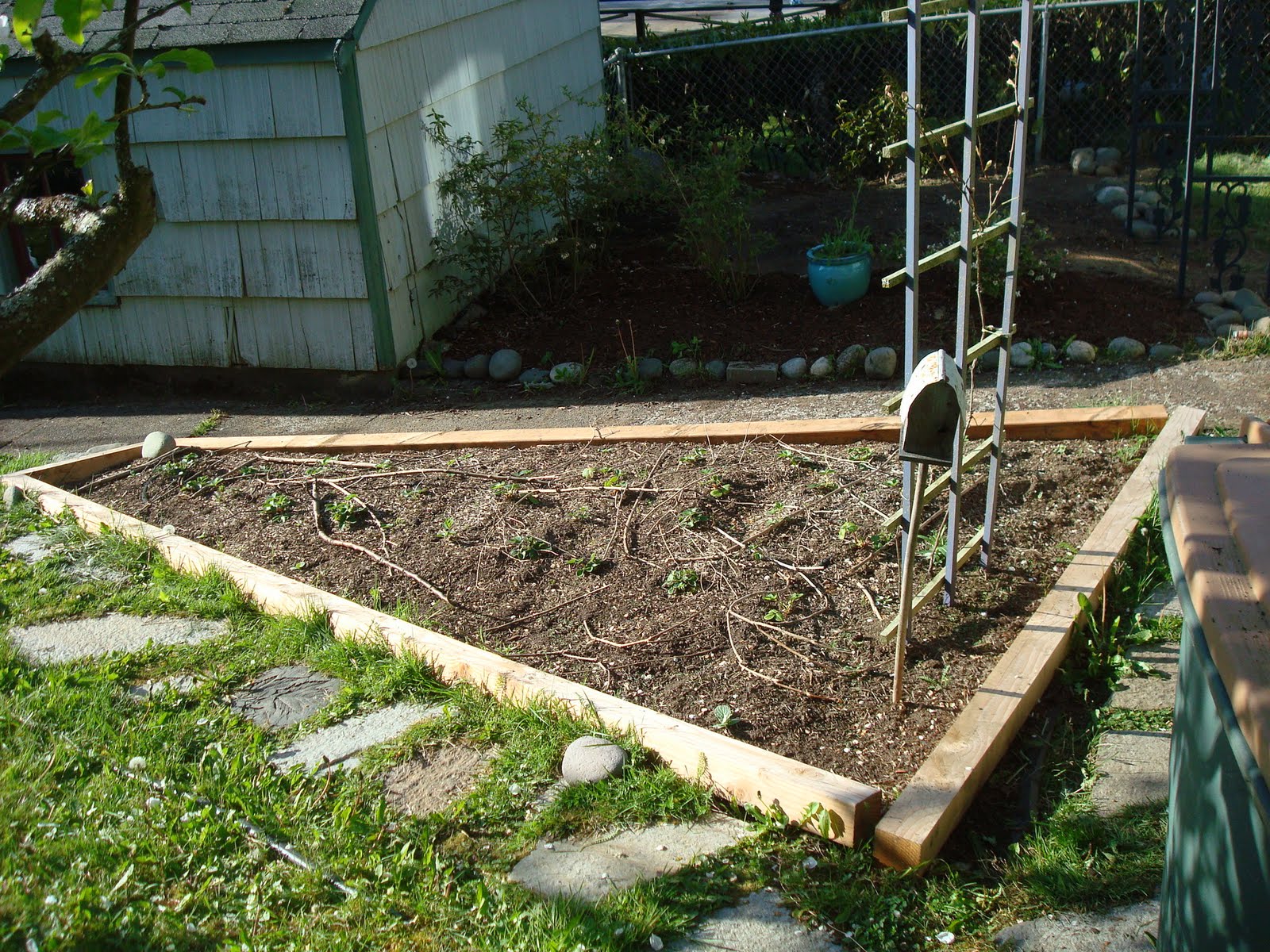
Garden Tour Spring 2011

Our house is a very very very fine house...
with two raised beds in the yard...


...and two kids too!


Here's our newest garden (still under construction).
It's home to the blueberries and the tea.


Welcome to Potatoville.


Here is our back deck, apple tree and two Rainier cherry trees.


And this is the new strawberry patch!


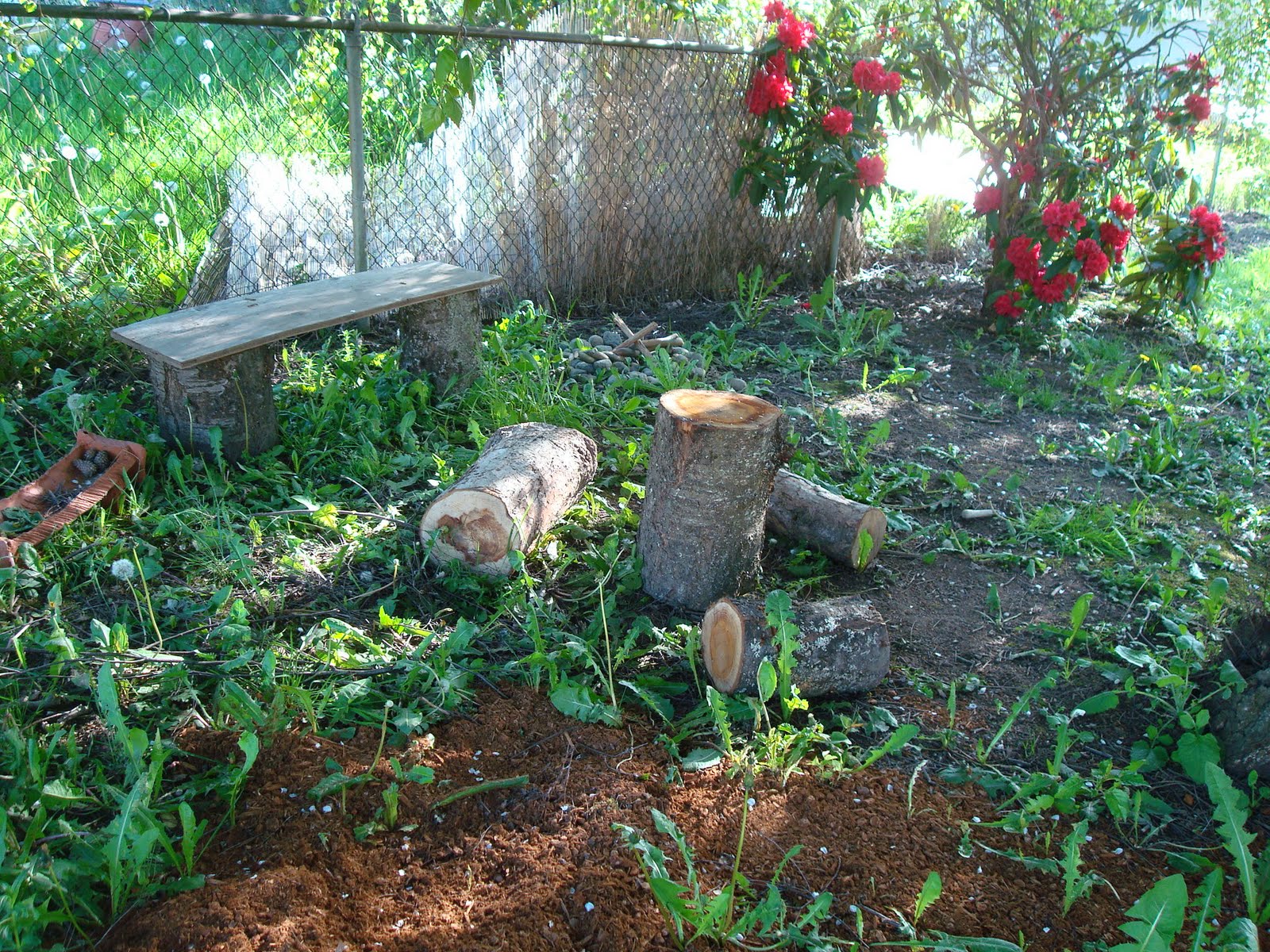
How about a little peek under our umbrella-shaped birch tree...


...where you'll find a little stump table and a fiery red rhododendron in bloom.


On the left we have peas, nasturtiums, cilantro and green beans.
On the right we have lettuce, kale, beets, onions and carrots.


Yum Yum.


The sun is shining and the lilacs are blooming.
Spring is officially here.


And let's not forget my two tea plants.
They had a pretty rough winter and I don't plan to make any tea this season.
I'm sure they'll be fine...


... and here is my proof!

Tuesday, March 15, 2011

2010 Denong Ancient Tree Sheng Brick

On Saturday I purchased this 100-gram puer tea brick from fellow Seattleite Jeffrey McIntosh. Jeffrey recently returned from Kunming, China, where he spent several months intensively studying all aspects of puer tea. He has a very good relationship with Denong (德農) Tea Company and imported these bricks himself. Lucky for us, he is now selling top quality puer teas to North American Chinese tea lovers like me!

Jeffrey's 2010 Denong Ancient Tree Sheng Brick.


On first sight, the wrapper looked familiar to me. I now remember having tried a couple of very nice Denong bricks a few years back. Those bricks were from Bana Tea Company and had similar size and floral paper design.

I also found it interesting that, besides the brick's Chinese name (德農古樹普洱生茶), the wrapper is entirely in English. Perhaps the producers fully intended this one for export?

This brick was marketed as very smooth, and very clean and natural. The wrapper even includes a certification sticker from SGS Taiwan to back up the seller's (in this case Jeffrey's) claim that there is zero pollution, pesticides, or other residues (i.e. bad stuff) in these leaves.

Sure looks good to me!


My wife and I spent some time getting to know this brick on 3/13/11 after we finished our Sunday gardening.

I used my ~100 ml gaiwan with about 5 grams of dry leaf and boiling water. A three second rinse opened the session nicely with a wonderful fruit and herb aroma. It was hard to describe the scent, but I'd say it had a hint of strawberry.

I pushed the leaves through 9 satisfying infusions and, as advertised, found no bitterness. The soup had a great amber color and good throat-feel but it lacked slightly in the mouth. The wet leaves always smelled so good but were elusive in the cup.


I found many things to like about this brick. It had moments of great complexity yielding snap pea, rosemary, bay and straw flavors. It also delivered a syrupy eighth pour that coated my mouth nicely.


Although I have had other sheng puer teas that I have liked just as much or more for the same price, I am still very pleased with my investment. This pretty little tea brick left me feeling light, clean and refreshed and I look forward to many future sessions.

Tuesday, March 8, 2011

Formosa Bonita

I recently had the great honor of tasting a rare and organic Taiwanese hong cha (紅茶) (red tea, aka black tea) made from the Jin Xuen (金萱) cultivar, and imported by the amazing Josephine Pan.

Josephine said the tea was produced in the Summer of 2010 in Nantou county. The locals call it simply "Mr. Chen's Organic Red Tea," but Josephine, at least for now, calls it Formosa Bonita.

Que Bonita!


I brewed this tea in a small gaiwan ~1/3 full of dry leaf. I used boiling water and started with a one minute infusion. Gradually increasing to 7 minutes for my 5th and final infusion.

It smells as good as it looks.


I really love this tea. It is bold and aromatic with a round, smooth mouth-feel. My tasting notes include caramel, malt, Assam black tea, toasted almonds, and chicory. The aroma under the gaiwan lid is sweeter and fruitier with a hint of cherry cider.


Josephine told me that the farmer is sold-out of this batch and that she only has a little bit left... so I bought myself a kilogram. I'd happily sell some (at $8 US per ounce) if anybody else wants to try it. Just email me at blackdragontea@gmail.com

Saturday, September 4, 2010

Kama'aina Green and Oolong Teas

I was eating my lunch at Teacup last week when I got an unexpected phone call from the Mauna Kea Tea Company on the big island of Hawaii. The proprietress, Kimberly, and I had a nice discussion about her and her partner Takahiro's tea farm. I could tell that they had truly found their calling producing organic tea in Hawaii, so after our conversation, I went right to their website and ordered one 25-gram bag of both Kama'aina Oolong Tea and Kama'aina Green Tea.

A week later the teas arrived, and I am excited to now share my opinion of them in the following two reviews. Keep in mind that I had no idea what these teas would be like before I first opened the bags and inspected them. Only at that point was I able to attempt an educated guess on how best to brew them for my first time.

I started with the green tea on September 1, 2010. According to Kimberly this tea is "a mix of varieties picked on June 30th, July 5th, and July 6th." The dry leaf was quite lovely and had a pleasing toasty aroma. Because it kind of looked and smelled to me closer to a Chinese style green tea, I decided to use one teaspoon of dry leaf in a 5 ounce gaiwan, 170° spring water and a two minute steep.

Kama'aina Green


The resulting tea soup was a striking fluorescent yellow color. It smelled sweet and nutty and I was in love from my first sip. To me this green tea is very complex and satisfying. It was unique and familiar at the same time. It had moments that reminded me of my beloved Yang Xian Mao Feng (陽羡毛峰) green tea, but it also hinted at gyokuro in the aftertaste. My tasting notes were all over the place and included: buttery, macadamia nut, black peppercorn, sauteed Swiss chard, and raw summer snap peas. I would reorder this tea in a heartbeat.

Green's Tea Soup


Green's Leaves


I drank the Kama'aina oolong throughout the day on September 2, 2010. Its dry leaves looked similar to the green, but it also had flecks of yellow, gold and brown. This tea was harvested on May 20th and May 21st.

At first I decided to brew it like I normally would a hearty Chinese oolong. I used two teaspoons in a 5 ounce gaiwan and boiling water. I gave the leaves a five second rinse and proceeded to smell them. Unexpectedly, they had a grassy, earthy aroma that reminded me somewhat of Japanese bancha green tea.

Kama'aina Oolong


My first infusion was about 60 seconds with boiling water. It presented an amber-yellow color with a heady grass and wildflower aroma. My first exploratory sip yielded a harsh and disappointing liquor. I had clearly over-steeped it so I backed off quite a bit on the steeping time, but the obvious potential in these beautiful Polynesian leaves was proving highly elusive.

Oolong's Tea Soup


The mouth-feel was bold and thick but the taste was "blah." The aroma on the underside of the gaiwan lid, on the other hand, was intoxicating. It was so fruity and delicious. My wife was reminded of candied pineapples and I of passionfruit. The question became... "How do I get this aroma into the cup?"

So after 3 infusions I removed half of the leaves from the gaiwan and cooled my water down to about 180°. This method became my saving grace and the softer, sweeter soup that it now poured was milky, floral and smooth. I do like this tea but I think I need to brew it like the green tea.

Oolong's Leaves

Wednesday, May 20, 2009

South Seattle Tea Estate - Part 2

On the morning of May 14th, my wife and I brewed up all 3 grams of the two-day-old homegrown tea that I described making in my previous post. I am still not quite sure what style of tea I made, but after tasting it and observing the leaves, I've decided to call it "Seattle White Peony" (西雅圖的白牡丹).

The dry leaf has a fairly even mix of oxidation and green bits. It is (if I do say so myself) a gorgeous looking tea.

Steeping in the gaiwan:


Using a 4 ounce gaiwan and 180 degree water, we were able to get 3 good infusions. The tea soup had a light honey-yellow color with a brisk fresh smell. Its unique flavor notes include lilac, rosemary, sweet corn and dry wood. I also picked up a bright grassy taste that reminded me of some first flush Darjeelings. Although it was a refreshing brew, it lacked body and had a slightly weird aftertaste but it was definitely not bad for my first tea making experiment.

Tea soup:


I always get excited when I'm eating homegrown fruits and vegetables, and now I have found the same to be true with tea. I would love to hear some stories from other tea makers, whether you are a pro or just a hobbyist like myself.

The spent leaves:

Wednesday, May 13, 2009

South Seattle Tea Estate - Part 1

Situated among rosemary, sage and four types of blueberries, the south Seattle tea estate is very small. In fact, it currently covers only one square meter of land and contains just one tea bush! The bush, named "Leafer," is of unknown varietal and was purchased for just $12 at the classical Chinese garden in Portland, OR. I believe she is now about 5 years old.

Harvest Time:


Just picked!


At 2:00 pm on May 11, 2009, I hand harvested a small batch of tender new leaf and bud sets. These leaves were then withered indoors for 5 hours before a few minutes of gentle hand rolling. After this rolling step it was oxidized overnight (about 9 hours).

After about three hours of withering
(taken as the sun is just starting to set):


Withered about five hours
(taken as the sun has almost set):


At 6:00 am on May 12, 2009, the tea was electric-oven-baked at 250 degrees for 10 minutes. This spring's crop yielded 3 grams of finished tea (enough for one serving).

At 6:20 am, I examined my freshly baked tea. The long twisted leaves are a beautiful mix of jade green and reddish brown. It had a sugary-lilac fragrance throughout its withering phase, which it still has, but now it's less intense, with an added gentle toasty aroma. At this point the leaves have fully cooled so I've put them in a clay jar to wait until Thursday when I'll have time to drink them with my wife!

My finished tea
(taken during the soft grey light of Seattle dawn):


To be continued...