Showing posts with label Strange brews. Show all posts

Sunday, April 1, 2012

Tea Jelly Brick

Today I'm drinking an interesting cup of puer tea that Cinnabar and I currently have for sale at Phoenix Tea. It is called Cha Gao (茶膏), which can be translated as tea-gel, tea-jelly, or even, tea-ointment. It is a decoction made by condensing brewed puer tea until it is possible to form a hard brick.


The brick itself looks a little bit like obsidian and can be broken easily into glassy shards. To brew the tea I dissolved a few tiny shards into about 8 ounce of boiling water.

That's all the tea I used:


The resulting tea has a nice color and a curious earthy, mushroom-like, shu puer (熟普洱) aroma. This heady redolence is both alluring and intimidating.


I sip cautiously. To my relief the liquor is pleasant. It has a nice syrupy sweetness and a subtle plum note. For the amount of gel I used the the tea is medium bodied. Next time I'll add a few more tiny shards... but I'm sure it will get too intense if I used too much. The mushroom smell remained, but it didn't present itself in the mouth. Given the option I'd probably prefer a normal "leaf" tea but I do like the Tea Jelly Brick, and can see myself drinking it from time to time.

Friday, March 23, 2012

Sun Dried Buds

Lately, I've been enjoying a unique and delicious tea made entirely from the sun dried buds of wild camellia trees growing in Yunnan, China. These wild trees can be used to make puer tea but, as you can see, their buds look quite different from typical tea buds.


The best way to brew these buds, in my opinion, has been to put a heaping teaspoon into a glass or jar, pour in ~8 ounces of boiling hot water, and then wait until the clear liquor develops a slightly yellow tint. Sip the tea leisurely throughout the entire day and add more water whenever the volume dips below half full. Most of the buds will sink to the bottom after a few hours and it will not get bitter.


The flavor is spirited and herbaceous. I get notes of pine and sage with a little bit of fruitiness. The body is light and refreshing and the throat-feel is wonderful.

Cinnabar's and my tea shop, Phoenix Tea, has these buds for sale here on our website.

Wednesday, August 10, 2011

Urban Herb #1 - Wild Chamomile

This is the alley behind my house.


It is filled with many urban herbs. One of which is wild chamomile (aka pineappleweed).


As it turns out this useful and tasty plant can be found all over Washington, especially in sandy soil near trails and paths. I've gotten into the habit of picking a little flower and crushing it between my fingers because it really smells amazing.

Wikipedia says: "The young flower heads can be used to make tea by steeping a handful of the flowers in hot water for ten minutes and then straining."
OK. I can try that.


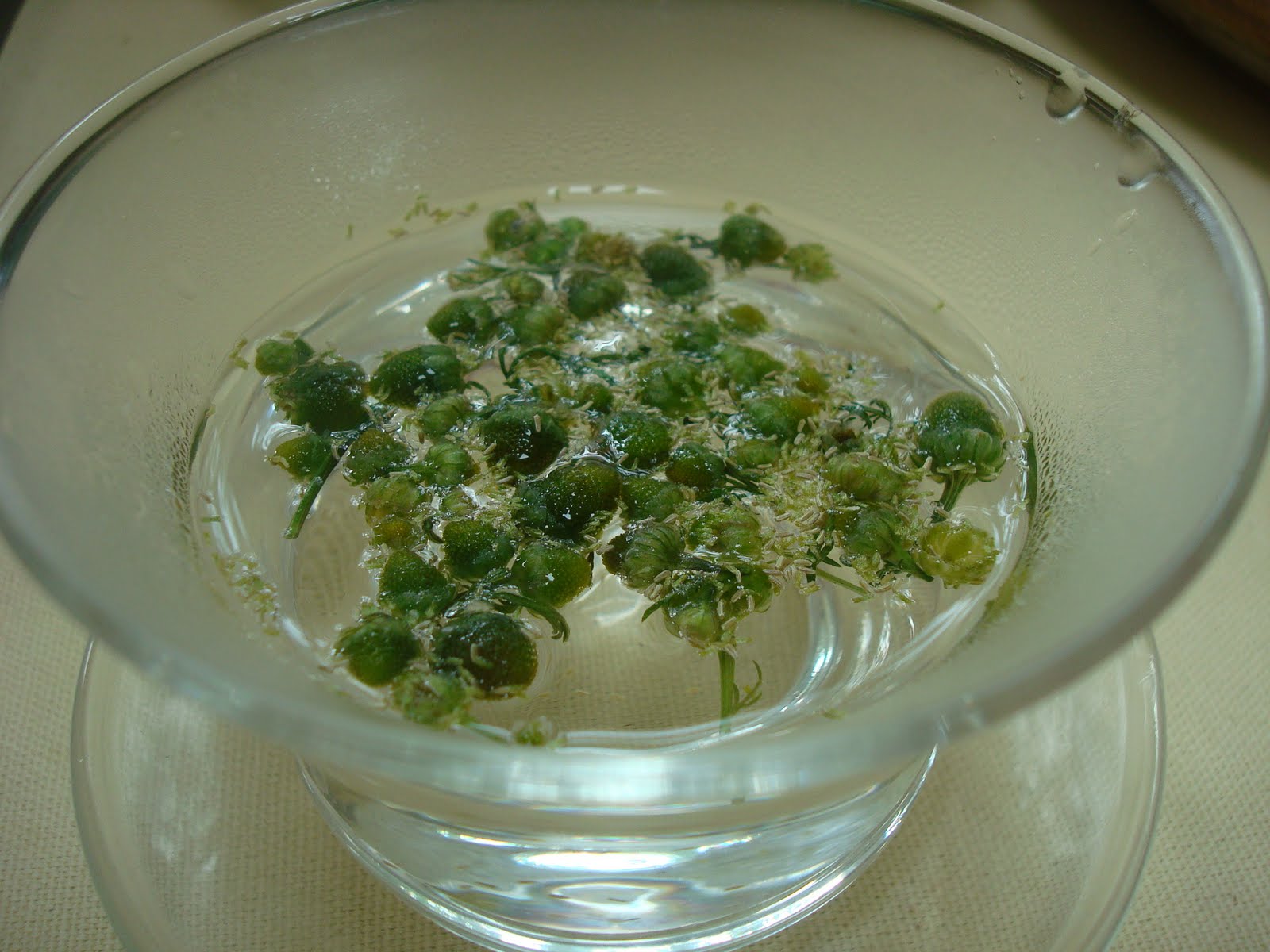
I used about one teaspoon of flowers in a half full gaiwan with boiling water. After a ten minute infusion the liquor is a pale yellowish-green color.

The smell is lovely in my opinion. It's like the freshest chamomile aroma I've ever smelled with a twist of ripe pineapple juice. The flavor is sweet, soothing and floral like any great chamomile flower infusion would be.

If you dig chamomile tea then you would probably like this.

It's very relaxing.

[Yawn]

I am starting to feel pretty sleepy.

Zzzzzzzzzzzzz

Thursday, July 21, 2011

Korean Lotus Root Infusion

My new friend Jason C. (president of the Penn State Tea Institute) recently returned from another one of his Asian tea treks. While he was in Korea I emailed him about my desire for some "primo Korean green tea." Jason didn't find any worthy specimens so instead I was so generously treated to a small can of dried lotus root tea!


The lotus is a beautiful and useful edible plant. It carries deep symbolic meanings for Buddhists. I've eaten lotus root before and found it to be quite delicious but for some reason I'd never thought about infusing it as a herbal tea. As it turns out lotus root tea is a very popular beverage the world over. The folks at Eden Foods state that lotus root tea is a macrobiotic staple and "long valued for its contribution to respiratory health."

I steeped about 8 slices of lotus root in ~8 ounces of boiling hot water for 5 minutes. The resulting cup had a pleasing amber color. The aroma was roasty, earthy and savory and it reminded me somewhat of french fries. The flavor in the mouth was a lovely surprise. It had a sweet, nutty, oolong-like flavor that I found slightly floral and very satisfying. I'm excited to have discovered this exotic infusion.

Monday, June 20, 2011

Thai Iced Tea Recipe

If you ever find yourself looking for a great Thai Iced Tea recipe that is delicious, healthy, vegan and all natural please give this one a try. It serves two.

Ingredients:
• 4 teaspoons of strong black tea (I use an Assam OP)
• 1 pulverized star anise pod (more or less depending on how much you like star anise)
• 1/8 teaspoon of turmeric (basically "a pinch")
• 2 cups boiling water
• 6 teaspoons of sugar (I like brown sugar in this recipe)
• 1 to 2 drops of vanilla extract
• 2 ounces of soymilk
• Ice cubes!
• 2 ounces of coconut milk (I prefer the organic, full-fat kind).


Steep the black tea, star anise and turmeric for 10 minutes using boiling hot water. Strain the leaves and then mix in the sugar, vanilla extract and soymilk. Chill in the fridge for at least an hour. Fill glasses with ice. Pour in chilled tea. Then top it off with a big spoonful of coconut milk.


Wednesday, June 1, 2011

Blueberry Tisane

Today the Association of Tea Bloggers is presenting a new Blog Carnival. Our topic is, "Write about how you brew one type of tea." To find links to all of the participating ATB members' blogs please visit the the distinguished tea guru known as Gongfu Girl.

I chose to write about how I brew Blueberry Tisane. I don't usually drink herbal beverages or tisanes (Ha. If only I had a dollar for every time a "serious tea drinker" makes this claim!) but lately my three-year-old daughter has been requesting "Blueberry Tea."

I don't have any blueberry tea... but I do have frozen blueberries... so I came up with a new recipe.

Here's what you do. First, gather the equipment: a little mortar and pestle and ceramic teapot (my preferred teapot is Sapphire). Then take the blueberries out of the freezer and pop a few in your mouth for good measure.


The key to making it so delicious (and it really is) is to smash up the berries. I've been using around 10 berries per cup but I find that you can't use too many. The stronger the better in my opinion.


It also helps to make sure your teapot is very hot before you begin. Steep the pulverized berries for at least 10 minutes with boiling water. Placing a tea cozy over the pot while it steeps will help keep the water as hot as possible. If your infusion doesn't have a dark purple color it will probably taste too weak.

À votre santé!

Monday, May 2, 2011

Kenya White Rhino Matcha

Today I tasted a tea that I'd never tried before, in fact before last week I'd never even heard of it. It's called "Kenya White Rhino Matcha" and it was imported by a well regarded, Can-Am outfit called Metropolitan Tea Company.

The Rhino (as I've come to call her) is a Kenya grown white tea that has been powdered like matcha. The powder...

...which looks like this...


...has a very nice, heady, fresh, white tea aroma. I tasted a tiny bit with my finger and it was very bitter.

I used a small, level, half teaspoon, of powder (about what I wound use when I whip myself a bowl of regular matcha) and about 4 ounces of 180° water. I'm certainly not a skilled matcha whipper, but I gave it my best, and the result looked and smelled pleasant.


Ick... way too bitter... like badly over steeped yinzhen (銀針) (silver needle white tea) (think 30 minutes, with boiling water and too much leaf). It was undrinkable and just two sips made me feel shaky.

I cut the amount of tea powder down to about 1/8 flat teaspoon (almost like a "finger nail" amount") and tried again with 160° water. Ah... much better flavor for me. It was a bit too weak and watery but I think that an experienced matcha whipper could probably coax out a little more body and sweetness.

If you've ever had a decent Indian or African white tea you can sort of guess at the flavor profile. I really struggled to put my taste perception into words with this tea so I'm just going to stick with "malty and grassy."

I didn't love the Rhino, nor the shaky, "not-mellow-buzz" that she left me with... but I did find her to be a very interesting and worthwhile beverage. Has anybody else ever tried any powdered white teas?

Friday, April 1, 2011

88 Treasures Tea (八十八寶茶)

A week ago, while browsing the tea aisle at 99 Ranch Market in Kent, a little red box of tea caught my eye. It was called 八十八寶茶 or 88 Treasures Tea, and I could see that it was from a tea company based out of Xining (西寧), China. It didn't cost too much so I decided to give it a try. In the least, it would make a good blog post.


You may already know that ba bao cha (eight treasure tea) is very popular in Xining. Eight is considered a lucky number to the Chinese and so the blend will always contains eight ingredients.

I looked closer at the package in my hand... and, sure enough, this blend appears to actually contain 88 ingredients!

I knew it would take me a hundred years to translate the packaging on my own, so I asked a Chinese friend who sometimes visits me at Teacup. He took the box home and then emailed me his translation a couple days later.

Here's what it says: "New Organic 88 treasure tea is the perfect, healthy gift for dad! Our unique blend of herbs and teas contains eleven times the power and longevity of simple eight treasures! Our tea is good for the prostate and vitality. Give dad the gift of life and great taste!"

The box even has a little picture of a young man giving a cup of tea to an older man printed above the product name. At this point it dawned on me that the 88 also appeals to the Chinese love of puns, because 88 and dad can both be pronounced "Ba Ba" in Mandarin. (That's why Chinese father's day is August 8th.)

So what's in the blend you ask? Here's the list that I was given:
Chrysanthemum, Astragalus, Wolf Berry, Jujube, Ginseng root, Tuckahoe, Tangerine Peel, Danshen, Snake Gourd Seed, Star Anise, Common Squill Bulb, Horsetail, Longstamen, Common Smoketree, Fritillary, Wax Gourd Peel, Sweet Osmanthus Flower, Dogbane Leaf, Rock Sugar, Ginko, Pricklyash Peel, Elm bark, Chamomile, Rosehips, Towel Gourd Stem, Raspberry leaf, Korean Monkshood, Loquat Leaf, Papaya leaf, Peppermint, Shanlu Tea, Spearmint, Drug Sweetflag Rhizome, Raisin, Oak Bark, Strawberry Leaf, Bat Guano, Vanilla, Passionflower, Kelp, Red Clover, Wild Cherry Bark, Rhubarb, Peony, Sand Root, Licorice Root, Damiana, Goldthread, Ma Huang, Hyssop, Candied Hawthorn, Stinging Nettle, Dong Quai, Lemon Peel, Puer Tea, Wintergreen, Tuberous Sword Fern, Lavender, Lemongrass, Bombax Flower, Ginger Root, Nux Vomica, Elder Flowers, African Plum, Salvia, Japanese Climbing Fern Spore, Nine Winter Monkey Tea, Echinacea, Marshmallow, Fermented Yarrow Flower, Clove, Lycopene, Water Vapor, Gut Flora, Selenium, Nut Husk, Saw Palmetto, Balloon Flower Root, Gypsum, Zinc, Snow Lotus, Urea, Dandelion, Valerian, Linear Stonecrop, Mustard Seed, Wooly Datchmanspipe, and Green Tea!

Here's what it all looks like:


I steeped it for five minutes in a small ceramic teapot (Chip to be precise) using boiling hot water...

...and here's the result:


So what does it taste like you ask? It's very sweet, with an odd metallic note and a surprisingly mild finish. The most noteworthy flavors were mud and syrup. I did pick up a little bit of gingery-heat in my throat about an hour after drinking.

As for the health benefits of imbibing so many exotic herbs... I really can't make any firm declarations. I feel a little bit light-headed and sweaty and my pee has never looked darker.

I probably won't drink 88 Treasures Tea again.

Monday, December 27, 2010

Ba Bao Cha Year #3

I have started an odd little holiday tradition. I drink a small cup of Ba Bao Cha (八寶茶) (eight treasure tea) and then I blog about it.

As I mentioned in my post Ba Bao Cha Revisited from 364 days ago, my friend Tiffany gifted me 19 single serving packs of Ba Bao Cha. I only drink one pack per year so...

...now I have these 18 packs left.


Besides rock sugar and a scant amount of green tea, every pack is a little different. I chose that pack on the top which appeared to be the only one with an orange slice in it.

The dry contents looked like this.


I steeped it for five minutes with boiling hot water. The resulting soup had an orange color and a fruity aroma.

I asked my wife to try a little sip. She did, and then instantly made a "yuck face." She did not want anything to do with it.

I then asked my almost three year old daughter, who was busy playing by herself in the living room and had not witnessed her mother's negative reaction, to taste it. She did... and had the exact same reaction as her mother.

I, on the other hand, didn't mind the flavor too much (although I'm quite sure that I could never drink more than 2 ounces in a single year). I liked this pack a little more than last year's sample because it was fruitier and less like drinking perfume.

Here is a shot of this year's eight holiday treasures!


Now lets see... I have: two cherries chopped in half / four goji berries / two chrysanthemum blossoms / rock sugar (which I'm not sure I would actually count as a treasure but hey whatever) / some sliced strawberry / one orange slice / and about 1 gram of broken green tea leaves.

1...2...3...4...5...6...7... uh... wait a second now... that's only SEVEN treasures! I've been robbed!

Oh well. I guess it's now time to go and brew some good tea anyway. Maybe next year I'll get eight treasures. Whether or not you even care, you can still count on me to tell you all about it in December of 2011.

Happy New Year!

Thursday, November 4, 2010

Cacao Husks

I love tea and I love chocolate.... but I do not like chocolate tea (or any scented teas for that matter). I do, however, occasionally enjoy a single-ingredient herbal infusion such as rooibos, ginger or mint. To that end I offer a post about drinking cacao husk tea!

On Tuesday, while at work, I met a representative of "Tisano Cacao Tea." He and his partners import organic chocolate from South America and one day one of them had this wild idea: "Why don't we import the fibrous husks too and try to sell them as an herbal tea?"

According to Tisano's website, 12% of the cacao bean is lost along with these fragrant husks. I guess that means a lot of cheap chocolaty goodness is also being lost when these husks become mulch, compost, feed or whatever.

The husks look like this...


... and I have seen them before. In fact my wife and I once purchased several large bags of these sweet-smelling husks from a nearby garden store to mulch our front yard flower bed. It never would have occurred to us to steep them like tea.

But that's just what I'm doing now. I follow the steeping directions on the bag and sniff the brown steeping husks. My nose immediately tells my brain to release a flood of happy chemicals.

The resulting beverage is tawny brown and smells similar to a cup of hot cocoa. The taste, on the other hand, is pleasantly nutty and not super powerful. Instead it yields a more relaxed, subtle cocoa flavor. I am a fan.

Drinking a hot infusion of cacao husks in my opinion certainly qualifies as a "strange brew." Has anybody else ever heard about this?

Sunday, June 6, 2010

KOMBUCHA

Kombucha is a slightly fizzy fermented tea drink with a sour and sweet flavor like vinegar. To brew it you need a "Kombucha mother" (aka SCOBY or "Symbiotic Colony of Bacteria and Yeast."

There are tons of different health claims being made about Kombucha tea but I'm not sure which ones are actually true. I would reckon the benefits differ from person to person.

Back in 2005, my buddy Jon G. gave me my first Kombucha mother and for several years, I was constantly brewing my own Kombucha at home. Between 2006 and 2007, I was often consuming around 2 to 4 ounces of Kombucha per day and I liked the way it made me feel. After a while I became known as "the Kombucha guy" around Queen Anne Hill. Whenever customers would come into Teacup and ask about it, they would be turned over to me. During those years, I happily shared free "Kombucha babies" with at least 20 different friends and clients.

My favorite time to drink Kombucha is after a day of hard work because I feel like it relaxes and soothes my sore muscles. I only ever drink a small cup (no more than 4 ounces per day).

In late 2007, for no particular reason, I decided to take a break from Kombucha home brewing. So, besides a few bottles of really-expensive-commercial-stuff, I have barely had any Kombucha tea during these last three years.

Last week, my sister-in-law Kristel and I were talking about home brewing Kombucha and where to find a new Kombucha mother. Twenty minutes later a Facebook friend offered two Kombucha mothers for free. I took this as a sign from the universe that I should start brewing again, so Kristel and I picked up our new"Kombucha babies" that same afternoon. (Thanks again Laura!)

So now I am officially back in the Kombucha making game!

Here's a photo of my latest half-batch started on June 2, 2010.


Pasted below is the recipe I usually use. I adapted it from the most excellent book "Wild Fermentation" by Sandor Ellix Katz.

Kombucha Recipe:

Hardware:
A stove
A stock pot with lid
A strainer
A heat resistant ceramic or glass bowl that can hold about a gallon of liquid (Do not use a metal or plastic bowl.)
A clean towel that is large enough to cover your bowl

Ingredients:
3 quarts of fresh spring water
3/4 cup of Organic Sugar
3 tablespoons of good quality loose leaf black tea
1 Kombucha mother (KM)
1.5 cups of mature liquid kombucha (MLK) (This is the broth that your new KM is floating in.)

Process:
  1. Mix water and sugar in a stock pot and bring to a rolling boil.
  2. Turn off the heat, add the tea, mix really well and then put the lid on the stock pot.
  3. Steep for 15 minutes.
  4. Pour the liquid though the strainer into the bowl. Because the liquid is still really hot, pour slowly--you really don't want the temperature change to crack your bowl!!! Also, If you are wearing glasses they will probably get "fogged-up" and you wont be able to see what you're doing. I recommend taking them off before you start pouring. (You may want to have a friend help you with this step.)
  5. Wait for several hours until the broth is room temperature. You will kill your KM if it is still too hot!
  6. Add the MLK to the bowl of sweetened tea.
  7. Wash your hands really well and then reach in and grab the slimy KM. Gently drop it into the bowl.
  8. Cover the bowl with the clean towel. I like to use a rubber band around the rim to hold the towel in place.
  9. Allow tea to ferment at room temperature for 2 to 4 weeks. You can check the flavor from time to time using a clean sterile spoon or ladle. If the temperature in your house is warmer your batch of Kombucha will ferment faster, and if it's cooler it will ferment slower. The longer it sits the more acidic it will become.
  10. When the Kombucha is at the acidity you like, you can ladle it out into glass jars with tight lids and keep it in the fridge for about a month. Now it's time to start a new batch!
What to do with your new KM:
The new KM will form on the surface of the liquid Kombucha while the tea is fermenting. The longer the tea ferments the thicker it will become. It will take the shape of the opening of your bowl. The old KM will either sink to the bottom or it will "grow into" the new KM (on the surface). If it sinks then you now have two mothers. In this case you can do one of these 3 things: start multiple batches at the same time, give one mother away to a friend or just toss one in the trash or compost. Also, you can keep a KM in the fridge (floating in MLK) for several months between batches.

Friday, June 4, 2010

TEBIETE - 特別特

I got this sample of "TEBIETE - The Tea King" (特別特 - 茶王) a year ago. Today I finally decided to break it out and review it.

This tea is from Anxi, Fujian (安溪,福建) province and was packed into one of those corny little "cigarette boxes" that you can sometimes find holding Da Hong Pao oolong (大紅袍烏龍).


The box was labeled as "organic oolong tea" in both Chinese and English. It contained one vacuum-packed foil bag holding 15 grams of tea. The dry leaves were huge pellet-shaped clusters of rolled-up leaves (a few were as big as an American dime).

the dry leaves

Before I began brewing this tea, I thought it was a nice, lightly-oxidized Tie Guanyin (鐵觀音) and that I'd be drinking it all day long. Little did I know!

I didn't stop to sniff the dry leaves and I had no clue what to expect as I dumped the whole pack of leaves into my gaiwan. I gave them a quick rinse with boiling water, opened the lid and sniffed the tea aroma.

OH MY GOD. It smells like peppermint!?!? I ran in to the living room and asked my wife to sniff it. She made a yuck face and said, "it smells really musty and has a distinctive mint smell."

I went back and brewed my first cup using a short, boiling hot steep. I brought the little cup of pleasant-colored mint-smelling tea up to my lips and took my first exploratory sip.

The liquor


YUCK! This tea is super sweet in a weird artificial-tasting way! It's an unpleasant and bitter sweetness that reminds me of stevia. The flavor also has a smoky, minty, licoricy, ginsingy aftertaste that hours later is still lingering on my poor victimized tongue.

I was only able to drink two small sips of TEBIETE before I tossed it all in the compost and started fresh with some truly good tea (this Meishan to be precise). Thank god I used a gaiwan and not a clay teapot to brew this minty monstrosity!

Thursday, April 1, 2010

Shanlu Green Tea

I recently treated myself to a rare Chinese tea called Shanlu Green Tea (山露綠茶). This beautiful, handmade tea is picked once a year in the hills surrounding Qi Shui village (汽水村) in China's Fujian province. It is know for having a distinctive sparkling sweetness and a hint of citrus aroma which is believed to come from the many lemon trees grown in the region.

The leaves look nice. They are mostly young leaf and bud sets with a humble pale green color and pleasant nutty smell. It's hard to believe that this totally normal looking Chinese green tea packs such a flavor punch!

a leaf and bud set

I used a heaping teaspoon per cup, 170° F water and a two minute steeping time. The resulting liquor had a vibrant green-yellow color and many more bubbles than any other green tea I've ever tried.


As advertised, the flavor was very sweet and bright with many unique citrus notes. In my tasting notes I had written: lemon rind, sparkly and sugary. I would not say that I love this green tea but it certainly was interesting.

Also, believe it or not, the Chinese say that Shanlu green tea has a higher than normal caffeine content then most other teas. I'm not sure why this is, but I definitely felt it. After tasting three infusions I was pretty buzzed. This might be a good tea to drink if you're into extreme sports.

Monday, December 28, 2009

Ba Bao Cha Revisited

Last year, I chronicled my first experience with Ba Bao Cha (八寶茶) (eight treasure tea). It is a blend of green tea, rock sugar, and eight different fruits and/or flowers and is a relatively popular beverage in certain parts of China. According to Google Analytics, my Ba Bao Cha post has brought more random searchers to this tea blog than any other post.

After reading my original review, my good friend and tea industry contemporary, Tiffany Picard, sent me 19 single-serving packets of different Ba Bao Cha blends. Because I am very seldom in the mood to drink flavored or sweetened tea, I decided that I would brew one packet every year around Christmas time.

This morning I decided it was time to try one, so I fired up the kettle and grabbed a gaiwan. Last year I used a larger teapot and omitted the sugar during brewing... but this time I emptied the entire contents of one small packet into the gaiwan (which is the traditional way to do it).

This was what was in the one packet that I chose to brew.


Steeping in the gaiwan.


I steeped the blend for 3 minutes with boiling water and then strained it into a decanter. I sipped it cautiously and noted its heady, perfume-like flavor. It is very sweet and fruity. My 22-month-old daughter, who is used to sampling a tiny bit of my tea, asked for a taste, so after it was cool enough I gave her a little sip. "Funny Tea!" she exclaimed. That cracked me up and we ended up talking about "the funny tea" for the rest of the day.

It tastes as "pretty" as it looks.

Keep in mind that Ba Bao Cha is not really "tea," it is a sweetened herbal beverage containing a little bit of tea. There are some people who believe the herbs it contains are particularly healthy or curative. While I can't speak to that, I do believe that it is much healthier to have a cup of all natural Ba Bao Cha than it is to drink soda or Kool-aid.

I steeped the Bao Bao Cha one more time and it was not nearly as good as the first brew. After a few more sips I started playing with the herbs to see just what I was drinking.

I found...

...a few chrysanthemum flowers,

some dried strawberry,


one rose bud,


three or four goji berries,


a plum, I think,


these weird little things,


a pinch of sad looking green tea,


one lonely nut of unknown name,


and an empty, mysterious pod, of unknown name.


I look forward to my third cup of Ba Bao Cha sometime in December 2010... but until then I think I'll go make myself a nice pot of Alishan!

Wednesday, October 28, 2009

60 Year Old Baozhong Stems

In May 2008, while tasting fresh spring Wenshan Baozhong tea (文山包種茶) with my friend Amin (阿民) in Pinglin (坪林) Taiwan, I asked my host "What is the oldest tea you have here?" Amin thought I wouldn't be interested but he answered "60 year old baozhong stems (包種梗)." I had him write out the number 60 because I wasn't sure that I had heard him right. Amin's dad (who I'd estimate was only in his mid-fifties) also told me that he thinks these stems are around 60 years old. After tasting them and considering the price (relatively cheap) I decided to buy about 5 pounds of them. My thinking was that some old tea enthusiasts (aka fellow puer nerds) or outdoorsy types (aka fellow hippies) might think these stems are pretty cool and, like myself, may enjoy their unique flavor.

This is what they look like.

It took me just over a year to sell out these stems (compare that to the myriad other oolongs that I imported, most of which sold out in just 2 to 4 months). I did however keep one 300 gram bag of these stems for myself and I do drink them from time to time.

I've found that the best way to brew these 60 year old stems is to toss a pinch of stems into a rustic looking bowl. Steep them for as long as you like using boiling hot water. This tea (like most good teas) responds particularly well to natural elements like wood and stone. For best results guys may want to grow a beard before sipping this tea and girls may want to wear something hand knitted. Also, if you have any rocks, nuts, leaves, shells or small bones lying around your house... it would be a good idea to gather them around you while you drink.


The flavor of these 60 year old stems is fantastic (in my humble opinion) but I can easily imagine it being a bit off-putting for some tea drinkers. When I asked my friend Lin Xiuyue (林秀月) in Yingge (鶯歌) Taiwan (who has a fantastic palate for high mountain tea) what she thought of aged stems, she answered by making a "yuck face."

The first sip is earthy, very very earthy... but after several sips the sweetness will start to appear. It tastes like roots with faint hints of licorice, ginseng and old-growth-forest-soil. If you drink this tea slowly while standing in one place for too long I imagine that roots may grow out of your feet and anchor you to the ground (which may or may not be such a bad thing). To me, this tea reveals a happy, and hospitable personality that reminds me of hobbits.

The liquor after about a five minute steep.

Thursday, October 15, 2009

Green Tea Flavor Project - SEAWEED

Fellow tea blogger Jason Walker recently came across an interesting research experiment conducted at the University of Kansas' Sensory Analysis Center. The experiment identified 31 different flavor attributes found in the 138 loose-leaf green teas randomly and blindly cupped by the study's participants. These 31 flavor attributes can be seen in Table 1 of A Lexicon for Flavor Descriptive Analysis of Green Tea (I am currently checking if it is possible to link to this study).

After reading the study results, Jason proposed a collaboration among members of the Association of Tea Bloggers to pick one flavor attribute and then prepare, photograph and evaluate an infusion based on the information in the study. I chose SEAWEED, defined in the article as: "the aromatics associated with shellfish, fresh fish and ocean vegetation." The study referenced a specific brand of "brown seaweed" that I couldn't find so I used kombu (which, along with wakame, is a type of brown seaweed). The study goes on to say: "Use 1 gram of seaweed with 300 mL {I'm assuming boiling} water. Let it sit for 10 minutes."

1 gram of seaweed. Check.


Steep for 1o minutes in 300 mL water. Check.


The resulting brew:


In that last photo it just looks likes plain water but it did have a little bit of a greenish-yellow tint when held in the right light. The taste was not nearly as oceanic as the smell (which could be a little hard to get past) but once the liquor was on my tongue I felt rewarded by its thick, umami mouth feel. It had a wonderful buttery, brothy flavor with notes of minerals and sand.

I have cupped tea with people in the past who identified a light oceanic or fishy taste in some teas while I did not. I imagine that if a green tea I was sipping had such an intense oceanic aroma or taste I would be pretty turned off by it. Tea grows in the mountains and seaweed grows in the ocean... and that's the way it should be! But that buttery, thick, smooth flavor (that I found to be very intense in the seaweed infusion) is one I have noted in several fantastic green teas such as high quality gyokuro tea from Japan and super fresh taiping houkui (太平猴魁) green tea from China. I believe part of this may come from a higher amount of theanine in these types of tea.

In closing, I am glad to have tasted an infusion of seaweed and look forward to reading the other bloggers' posts about their own flavor experiments! I will add the links to the other blogs as they are posted.
10/19/09 Walker Tea Review - Parsley
11/7/09 Tea Pages - Asparagus

And after the experiment... I ate the seaweed. Yum.

Friday, September 11, 2009

Indonesian Teh

My tea friend Nicole* recently returned from several weeks in Indonesia and she brought me a little bit of Indonesian tea as a gift! It came packed in this sweet little box with a bird on it.


This is what Nicole told me about this style of tea: "This is Indonesian tea (teh). I've been brewing it like a black tea but the Indonesians usually add lots of sugar (teh manis). It can be hot or iced, but traditionally it's hot and really sweet."

The box lists three ingredients: Teh Bubuk, Aroma, and Vanili. The tea itself looks brown and powdery with lots of "husky bits." It has a potent vanilla scent.

The Teh:

I believe that all tea is good (yes, even Lipton) if you drink it with the right people and/or the right attitude... so in hopes of making this tea taste better, I decided to take an imaginary journey to Indonesia (a place I've never been) while brewing and sipping this tea.

In my mind I am sitting in a breezy outdoor cafe surrounded by many new sounds and smells. I am waiting for a cheap, delicious lunch of fresh fruit and nasi goreng. I have become very thirsty and hungry from an unforgettable morning spent exploring old temples and lush jungles. After lunch, I am both excited and nervous about visiting an orphanage for orangutans. While I wait for my food a server brings me a steaming hot cup of sweet local tea. I savor its heady aroma and make small talk with a friendly old fisherman. He tells me proudly that Indonesian tea is the best in the world... and even though I have a few ounces of a (much preferred) high mountain oolong in my backpack, I agree with him, because right now this is the only cup of tea that matters.

The Brew:


While I was never expecting to be blown away by this tea, I did enjoy it. I used about 1 teaspoon of dry leaf to about 8 ounces of boiling hot water. I steeped it for about 5 minutes before stirring in a heaping teaspoon of raw sugar. The resulting brew was pleasant, though the vanilla aroma was a bit cloying. I'm sure it would go well with spicy food. I won't be drinking this often but I'm happy to make some space on my tea shelf for this cute little piece of Indonesia.

*Nicole is the same groovy globe trekker who introduced me to Ba Bao Cha and Tibetan butter tea. Xiexie Nicole!