Showing posts with label white tea. Show all posts

Friday, January 25, 2013

Northwest White Tea & Herb Blend

Seattle based, PCC Natural Markets, Portland based The Jasmine Pearl, and Sakuma Brothers Farm recently teamed up to offer PCC customers unique herb and tea blends made entirely out of local ingredients. PCC broke this news to their members last month with an article called "taken with tea."

This morning, while browsing the bulk teas at PCC, I saw these new blends for sale and decided to purchase a small amount to review here on my tea blog. I went with the white tea based blend which also contains blackberry leaf, nettle, lemon balm and lavender.
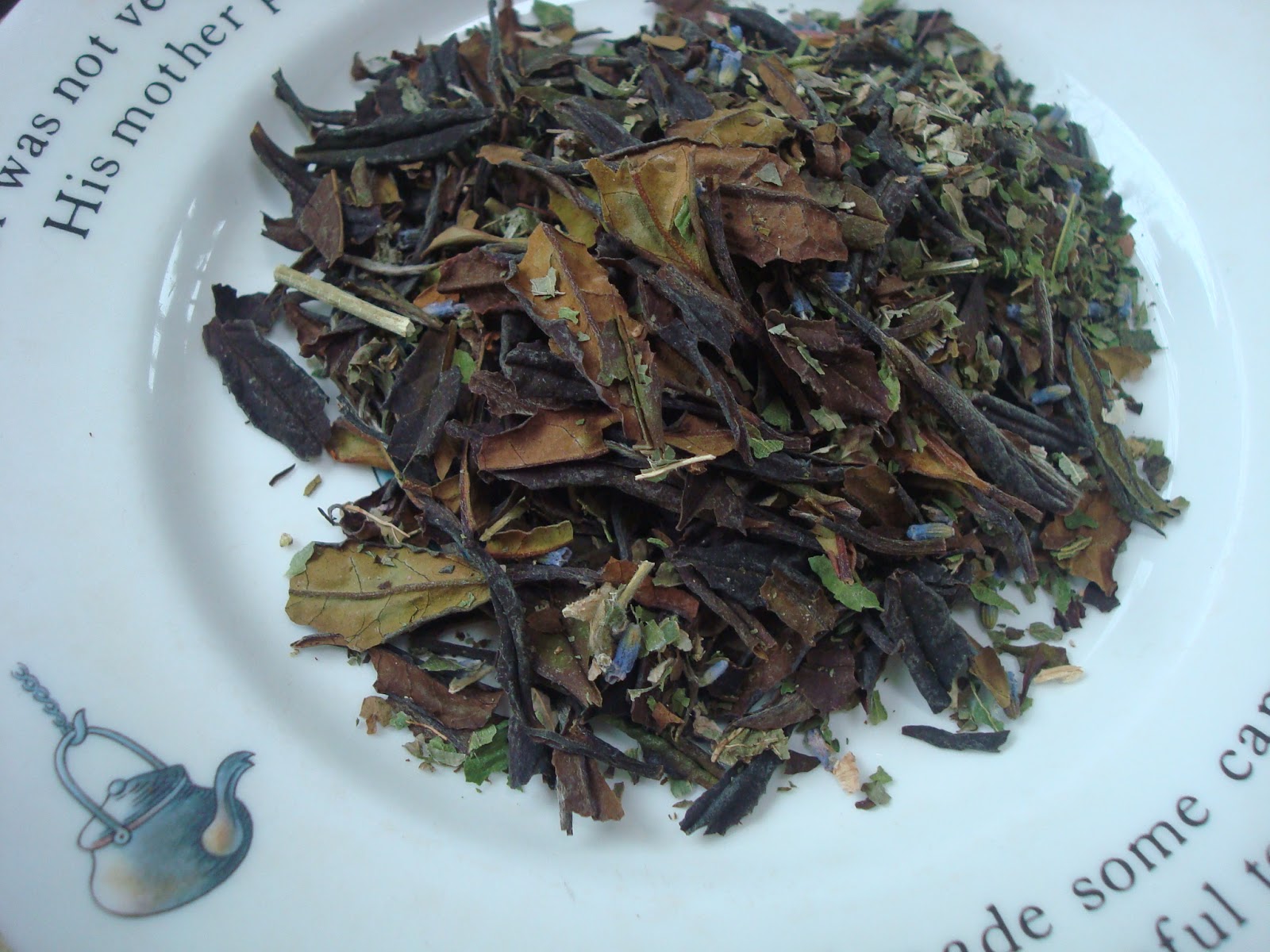

The dry leaf smells like lavender with some sweet grass, and wood notes. I used a heaping teaspoon of dry leaf, 8 ounces of 180° F water, and a medium Finum basket to infuse this blend. The resulting liquor was orange and fragrant. 

I love supporting local food and herb producers and I've enjoyed my past encounters with Sakuma's unmixed tea but this blend is not for me. The tea feels healthy and restorative to drink but it is too sweet and I really do not like the lavender flavor.

As an enthusiastic drinker of pure tea, perhaps I was never the target demographic for this product. I would be much happier to just see unadulterated Sakuma Brother's tea leaves on sale at PCC. That said, I'm sure many folks will think this blend has a great flavor and hopefully these products are finding fans among PCC shoppers. The quality of the ingredients and the wonderful people behind their production and blending makes them a good way to "drink local."

Thursday, September 13, 2012

White Peony Cupping Experiment

A couple days ago I conducted a new cupping experiment with a high quality White Peony (aka Bai Mudan) (白牡丹). I thought it might be interesting to stagger the water temperature and the steeping time three ways and taste the resulting infusions.

For this cupping, I used six identical 8 ounce glass mugs. After the cups were cleaned and warmed I placed 2 grams of White Peony dry leaf into three of the cups.

The first cup was brewed for 2 minutes with 200° F water,
the second cup was brewed for 4 minutes with 180° F water,
and the third cup was brewed for 6 minutes with 160° F water.


After they steeped for the correct number of minutes the tea soup was immediately decanted into an empty mug.

200° (left) - 180° (middle) - 16o° (right)


As you can see, the liquor had a very similar color for each cup. They all smelled nice too but 200° had a little less fragrance than the other two.

I sipped each cup carefully going back and forth between them while making notes.

16o° for 6 minutes was easily my favorite. It had the cleanest mouth-feel, a pleasant sparkly sensation in the throat and aroma notes of champagne and fragrant wood.

Predictably, 180° for 4 minutes was squarely in the middle. This cup of tea was a bit heavier and earthier than 160° with some similar flavor notes but also notes of grass and sand.

200° for 2 minutes tasted "cooked" and had a harsh finish. The usual nice fragrance of White Peony was present but in the mouth it was muddy and elusive.

After sipping the 200
°, when I switched back to the 160°, the 160° really popped out with a sweet, clean, happy flavor. And of course, going the other way made the 200° taste even worse.

Another point in favor of the cooler water was the look of the leaves after the first infusion. The 200
° were limp and dull looking. They did not steep well at all for their second infusion. The 180° and the 160° both still had little bits of dry white fuzzy buds shielded by the top leaf. These cups produced good second infusions.

160° right after the first infusion (left). The white fuzzy bud is still mostly dry.
180° (in the middle) has a little fuzz left.
200° on the right is spent and the bud is cooked to a pale green.


*Like all my casual cupping experiments these results don't really mean anything in the larger scheme of things. This same experiment could have totally different results depending on any number of variables. Even so, it reinforced my long-standing personal belief that most white teas prefer a longer, cooler infusion.

Friday, March 23, 2012

Sun Dried Buds

Lately, I've been enjoying a unique and delicious tea made entirely from the sun dried buds of wild camellia trees growing in Yunnan, China. These wild trees can be used to make puer tea but, as you can see, their buds look quite different from typical tea buds.


The best way to brew these buds, in my opinion, has been to put a heaping teaspoon into a glass or jar, pour in ~8 ounces of boiling hot water, and then wait until the clear liquor develops a slightly yellow tint. Sip the tea leisurely throughout the entire day and add more water whenever the volume dips below half full. Most of the buds will sink to the bottom after a few hours and it will not get bitter.


The flavor is spirited and herbaceous. I get notes of pine and sage with a little bit of fruitiness. The body is light and refreshing and the throat-feel is wonderful.

Cinnabar's and my tea shop, Phoenix Tea, has these buds for sale here on our website.

Friday, February 24, 2012

Two White Teas - Comparison Cupping

I've been meaning to do a comparison cupping (aka side-by-side cupping) of Canton Tea Company's Silver Needle (Yinzhen / 銀針) white tea and Royal Tea of Kenya's White Whisper for some time now. I've tasted them on their own quite a few times but today will be the first time I've ever cupped them up together.

These two teas are both teas that Cinnabar and I are proud to stock at Phoenix Tea, so please keep that in your mind as you're reading my (some might say glowing) reviews.

I chose two identical cupping sets each with 4 grams of dry leaf.

Silver Needle (SN) is on the left.
White Whisper (WW) is on the right.
(It'll be the same for all photos.)


The first thing I notice is how different they look. The SN leaves are much shorter, plumper and fuzzier, while the WW's are long and straight. The SN also has a more pungent earthy, smoky aroma while the WW's is sweeter, lighter and grassier.

A five minute steep with 170° F water yields two very different cups of tea.


I did 3 infusions using those parameters and the liquors were about the same colors each time.

SN was always several shades darker and more aromatic in a musky, brothy sort of way. It has wonderful body with foresty notes such as pine and cedar. This tea lingers beautifully in the throat.

The WW is markedly sweeter with a sparkly champagne-like tingle that I find so refreshing. The body, like the color, is quite a bit lighter than the SN. The aroma flits about playfully suggesting wild flowers, hay, and honey.


I don't drink white tea very often so after a session like this one my body feels electric. My eyes are wide open and my toes are tapping swiftly. I'll need some food and aged puer soon to help me mellow out.

Even so, I really adore both of these teas. They are complex and rewarding beverages. I couldn't choose a favorite because it would depend on my mood which tea I would pick to drink.

Monday, May 2, 2011

Kenya White Rhino Matcha

Today I tasted a tea that I'd never tried before, in fact before last week I'd never even heard of it. It's called "Kenya White Rhino Matcha" and it was imported by a well regarded, Can-Am outfit called Metropolitan Tea Company.

The Rhino (as I've come to call her) is a Kenya grown white tea that has been powdered like matcha. The powder...

...which looks like this...


...has a very nice, heady, fresh, white tea aroma. I tasted a tiny bit with my finger and it was very bitter.

I used a small, level, half teaspoon, of powder (about what I wound use when I whip myself a bowl of regular matcha) and about 4 ounces of 180° water. I'm certainly not a skilled matcha whipper, but I gave it my best, and the result looked and smelled pleasant.


Ick... way too bitter... like badly over steeped yinzhen (銀針) (silver needle white tea) (think 30 minutes, with boiling water and too much leaf). It was undrinkable and just two sips made me feel shaky.

I cut the amount of tea powder down to about 1/8 flat teaspoon (almost like a "finger nail" amount") and tried again with 160° water. Ah... much better flavor for me. It was a bit too weak and watery but I think that an experienced matcha whipper could probably coax out a little more body and sweetness.

If you've ever had a decent Indian or African white tea you can sort of guess at the flavor profile. I really struggled to put my taste perception into words with this tea so I'm just going to stick with "malty and grassy."

I didn't love the Rhino, nor the shaky, "not-mellow-buzz" that she left me with... but I did find her to be a very interesting and worthwhile beverage. Has anybody else ever tried any powdered white teas?

Monday, October 25, 2010

Anji Baicha

Anji Baicha (安吉白茶) is a green tea from Zhejiang province that is made with a popular white tea cultivar. It was only recently (while researching my post about Emperor Huizong) that this type of tea first made a blip on my "tea radar."

The more I researched Anji Baicha the more my curiosity was piqued. I even read many websites that claimed it has much higher amounts of L-theanine than most other types of green tea. I have yet to find any evidence for this claim, though I think it may exist in Chinese.

I finally got my first chance to try Anji Baicha at this year's Northwest Tea Festival. My friends at Silk Road Teas gave me an ounce after I helped them out in the tea tasting booths.

Silk Road's specimen is made up of beautiful jade-green leaf and bud sets. They have a clean nutty aroma.


I brewed the tea in a medium gaiwan about 1/3 full of dry leaf. My water temperature was quite low at 155° F. I was surprised by how quickly the tea infused. Less than a minute of gentle "lid-kneading" produced a very fragrant cup of yellow tea soup.

The brothy, buttery flavor of this tea is soothing and well balanced by a refreshing grassy peak. I can (and do) drink many luscious infusions.

While I sip, I wonder what (if anything) this tea has in common with the Anji Baicha that Emperor Huizong had wrote about in his tea book some 900 years ago. My new mission is to learn more about Tang and Song dynasty tea preparation. Anybody have any resources or recipes?

Monday, May 3, 2010

My Spring 2010 Tea

One week ago I made 6.5 grams of finished tea from my two backyard tea plants. If you want to read about how it was made click here.

Here's a picture of it:

I thought I was making an oolong tea. Though it is semi-oxidized, I think it is more like a white peony tea. In fact, in many ways, I think I made almost the same tea I made last year... only this time I don't think I baked it long enough because it still had a limp feeling and smelled a bit musty by the time I brewed it. Interestingly, I baked this tea twice as long as I did last year. Maybe this year's tea had a higher water content to begin with? Or maybe (and perhaps more likely) it was the bowl I baked it in this year, which was thicker and deeper than last year's baking dish. It is a good thing I've been taking such good notes. Now maybe if I just start to pay attention to what I'm doing, I can learn from my past mistakes and start to make better tea in the future.

On Saturday morning (5/1/10), my friends David, Gwen, James, Andrew and Chris joined me at Teacup to taste my home grown tea. I chose Vortex to do the honor of brewing my creation. I used all the leaf and started with a 3 minute 190° steep. It was way too weak... but the tasters were complimentary of the brew saying it had potential and a pleasant "tingle" in the mouth.

The second steep was boiling water for 5 minutes. Much better... but still too light. David noted that this infusion had a nice flavor reminiscent of decent quality Assam Indian white tea. He also commented about my tea possessing a certain unique flavor that he has tasted in all of the Washington State teas he has previously sampled.

A photo of the second infusion:


The third steep (10 minutes with boiling water) and the fourth steep (15 minutes with boiling water) were well liked by all tasters. Chris likened the aroma to a brewery he once knew and Andrew spoke of its interesting herbaceous flavors (perhaps from the giant rosemary plant that grows right next to the main tea plant). The fifth infusion (also 15 minutes with boiling water) was pleasant but once again yielded a very weak flavor. After five infusions we called it quits.

In closing, I'd say that this spring's tea was pretty good and that I learned a little bit more about making tea. Hopefully, I'll get another chance to practice in the summer.

It was a very rewarding exprerience to make my own tea completely from scratch!

The beautiful spent leaves:

Sunday, September 6, 2009

2006 Jinggu Da Bai Hao - 景谷大白毫

Back in 2006, I purchased two puer cakes labeled Jinggu Da Bai Hao (景谷大白毫). Jinggu is the name of an autonomous county in southern Yunnan. Da Bai (big white) is one name for a particular tea plant cultivar that produces plump, fuzzy white buds. These buds are most often used in Fujian province to make the much beloved Yinzhen (銀針) (silver needle) white tea, but they are also found in Yunnan and can be used to make some wonderful puer teas (普洱茶).

The cake I'm reviewing today has a green label printed on a thick, textured paper-wrapper.

The cake:


This puer cake is made entirely of beautiful grey, gold, silver and white tea buds.


It has (in my opinion) a hilarious nei piao (內票)(internal ticket). Here is the wording and punctuation exactly as printed for your amusement:

The product is manufactured form Dabai Tea(an ancient tea tree with over one hundred years history in jingguyang Pagoda , Simao , Yunnan), through a traditional method of Pu'er Tea. Being free form pollution, it is characterized by broad leaves,big buds, bloom and clear liquid. Moreover, owing to its effects in persisting cancer, reducing fat and blood pressure, losing weight and persisting aging, it is regarded as good medicine to prolong your life.

I used a small gaiwan with about 4 grams of dry leaf, and 180 degree water. The amber broth is woodsy, delicate and pleasant with a flavor that is both subtle and complex. Throughout 10 infusions it reminded me of sheng puer, Yinzhen white tea, and first flush Darjeeling. My tasting notes included: nutty, crisp, slightly fruity, vibrant, light smoke, muscatel grape, and pine forest.

Tea soup and infused leaves:

Monday, September 22, 2008

Tea Basics - White Tea

About a thousand years ago in China, white tea was one of several highly prized tribute teas. Emperor Huizong is said to have written poems about this style of tea. Fortunately, most tea shops carry a few good ones these days! White tea is made up of carefully selected leaf buds that have yet to mature and develop chlorophyll. The window for plucking this delicate raw material is usually short and occurs in the early Spring. These buds are often not oxidized at all, they are simply dried though some white tea production does involves oxidation.

White tea produces a very smooth and thirst quenching cup of tea. The subtle and complex flavors of a good white tea will seem to dance on your tongue! White tea is quickly gaining popularity in the West. This is due to all the recent research showing a direct link between teas antioxidant properties and a healthy body. For a lovely cup of white tea, a few names to look out for are: White Peony (白牡丹), Yinzhen (silver needles) (銀針), and Drum Mountain White Cloud (鼓山白雲).

Yinzhen: