Wednesday, March 27, 2013

Spring Garden Gallery

Here's a little peek at what's been going on around our yard these last few days!

I scored this massive pile of bricks from my neighbor. 
So much of my time has been devoted to the ancient art of "brick schlepping!"

Building a yellow brick road,

reinforcing this raised bed,

and thinking about putting a brick patio right here.
(That log back by the fence is my shiitake mushroom log. I'll let you know if it ever fruits.)

The front yard is looking pretty good, though it could stand some more weeding. Chives, kiwi, rosemary, mint, wintergreen, salal and many other plants are doing well here. Our little pear tree (in the middle, surrounded by fava beans) is a year old now and will be flowering soon!

Speaking of flowering fruit trees, our apple tree and 
our two cherry trees are currently producing tons of lovely buds.

Here's a pic of my daughter in one of her favorite places.
Hanging out (literally) under a cherry tree.


Also in the front yard we just planted carrots, beets and potatoes.


I currently have three tea plants. This one appears to be happy and healthy

and it has quite a few pretty new buds.


My other two tea plants look like this!
Any advice on how I can make them happy again would be greatly appreciated.

Hope you enjoyed my Spring garden gallery. Feel free to leave links to your own in the comments. I'd love to see your garden!

Friday, March 22, 2013

Tea with Jody

My friend Tiffany recently connected me with a tea lover name Jody from San Francisco. Jody works for Samovar Tea Lounge and has his own tea business called Tap Twice Tea. Last weekend, Jody was in Seattle and he came down to Phoenix Tea for a wonderful afternoon spent tasting tea and chatting with Cinnabar and me.

Together we drank Phoenix Tea's 5 year aged/roasted Nantou county oolong, Dan-cha (a Korean red tea) and Tap Twice Tea's Large Leaf Shu Puer. I had a great time and truly believe that Jody is a kindred spirit. I wish him all the best with his future tea-related projects. By the end of our afternoon session I was most pleasantly tea drunk.

Jody left behind four samples for Cinnabar and I to taste at our leisure. Today I cupped them all. They were all very beautiful and delicious. I'll provide their names exactly as Jody wrote them on the samples bags.

North = Xi Biang Phoenix
South = 95 Sheng Large Leaf
East = Diamond Crate 2001 Sheng
West = Large Leaf Shou Puerh W.P.

Monday, March 11, 2013

2007 Hengfu Sheng Puer Cake

From 2005 to 2007, I (along with many other people around the world) spent a lot of free time buying, drinking, and studying puer tea. It was during these "bubble years" that I purchased most of my puer tea collection. I wouldn't say it's a huge collection. When compared to some other puer buffs I've met, it is really quite small. My collection currently hovers around 50 different teas, most of which are compressed (cakes, bricks etc.). During the past 5 years, I've reviewed nearly all of my puer teas on this blog.

One of the few tea cakes that I've yet to review is a 2007 Hengfu (恒福) sheng puer purchased from Seattle's venerable New Century Tea Gallery. I'll admit that I paid way too much money for this tea and the blame for that fact lies solely with me. It was a time in my life when I had some disposable income and I was trying to impress a friend, as well as the wonderful owners of New Century. As it turns out, vanity such as I displayed that afternoon, is NOT a good excuse for buying tea (or anything else for that matter). This realization, along with familial budgetary necessities, and other evolving personal interests, led me to a self-imposed ban on buying puer tea in 2010. (But I still trade for it and I love to get it as gifts!)

Anyway, back to the review... I'll begin with a lumpy photo of the wrapper. It has a big yellow diamond sticker covering the front which I've always thought was a little weird.


The dry leaves are flecked with brown and silver and have a pungent forest and smoke aroma.


Brewed in a small gaiwan with ~5 grams of dry leaf and freshly boiled water, this tea produced a medium-dark amber color with subtle camphor, cedar and tangy peach skin aromas. The flavor is too woodsy and grassy, dominated by oak, fresh hay, and sweet dry tobacco notes. Thankfully, it's not very smoky, but all of its nice aromas get lost in the grass. Also, the body is not as thick as I would like from a tea of this age. Infusion after infusion yields a smooth-ish, mild-flavored liquor with very little aftertaste. It's not bad but it's definitely nothing to write home about.


Monday, March 4, 2013

Tea Pet FAQ

Q - What are these things?


A - They are Tea Pets! You probably already know Shu Shu T. Dragon from this blog. He's pictured above at eleven o'clock. FUN FACT: Shu Shu is actually a Pixiu (貔貅) but I call him a dragon because that's his last name. The other four you'll meet someday when you visit Phoenix Tea in person.


Q - What are they for?

A - They sit on a tea tray and get hot water and hot tea poured over them. Most Tea Pets are made of porous clay which will absorb the essential oils of the tea adding luster and color over time. One of the tea pets, pictured above at six o'clock (his name is Rex) is made out of a special material that turns yellow when he gets hot. 

Q - Is this a very common practice?

A - The Tea Pet trend started in Asia as a lucky and whimsical addition to tea brewing. During my travels around Taiwan, San Francisco, Seattle and Vancouver, I've seen many different examples including turtles, dragons, bats and feet. The most common tea pets I've come across are frogs with coins in their mouths (aka jinchan / 金蟾). The tea pet phenomenon is not for everyone, but there's no doubt it is spreading to tea lovers all around the world.

Friday, February 22, 2013

Learning about Liu An

During this last year I have been learning a lot about heicha (黑茶) (literally "black tea" but more often translated as "dark tea"). In the past, this large category of Chinese tea, which includes shu puer (普洱), was a mystery to me. I still don't claim to fully understand it but I have now tasted many grades of heicha from Anhui and Hunan provinces and read some great articles about it online such as: What is Heicha or Dark Tea? by Peony Tea, Understanding Heicha or Dark Tea by Walker Tea Review, and Heicha by Teatrekker.

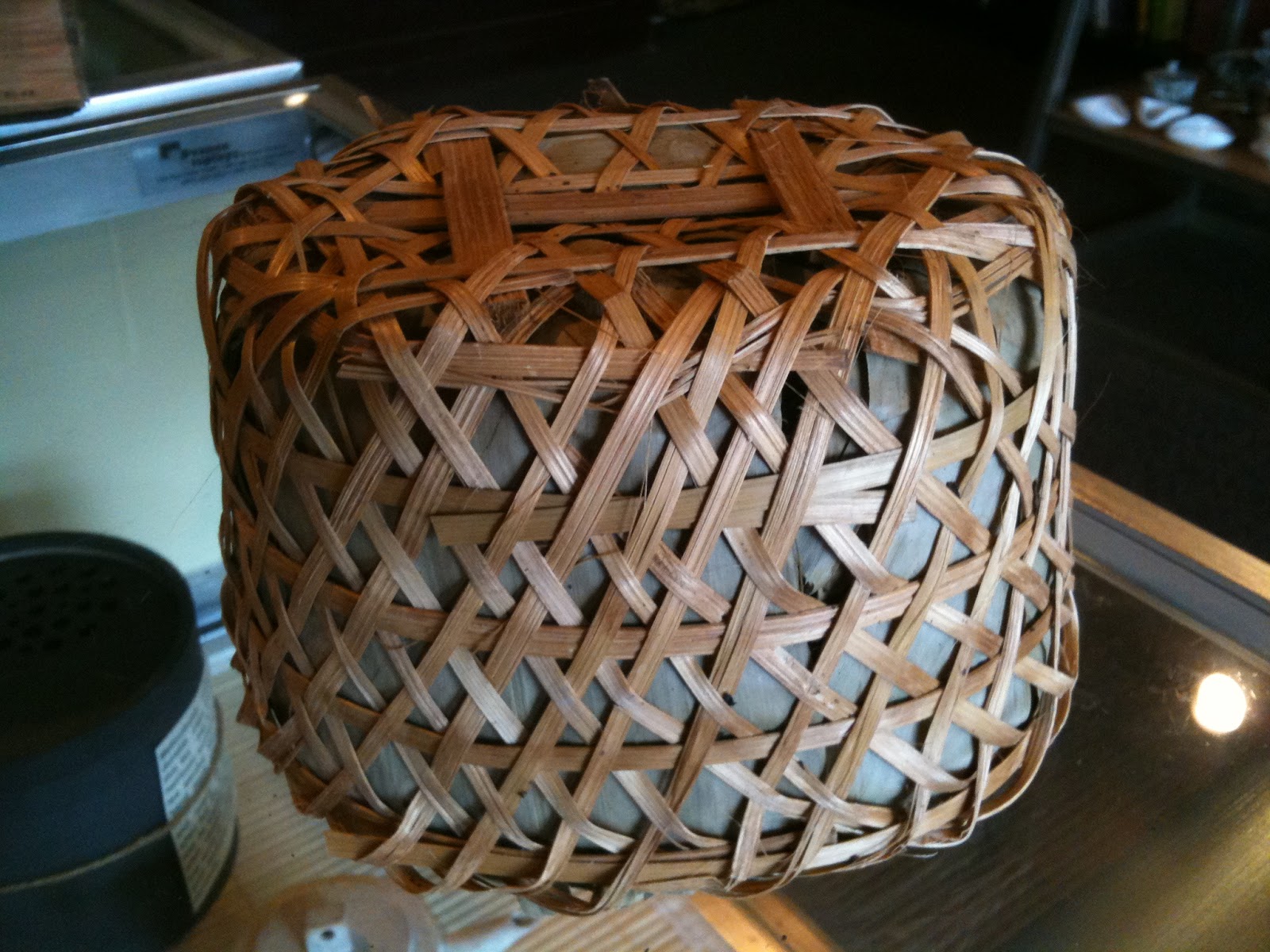
One particularly intriguing type of heicha is called Liu An Basket Tea  (六安篮茶) from Anhui, China. My first experience with this type was several years ago when I read about it in The Art of Tea Magazine (Issue #5). I'd actually never tasted it until we got some at Cinnabar's and my tea shop, Phoenix Tea. This afternoon I'm savoring a 1990's Liu An teas while rereading the article in Art of Tea magazine.

A basket of 2008 Liu An:
 

A peak inside the basket:

A chunk of 1990's Liu An 
(This is what I'm currently drinking. 
It's rich, brothy, sweet, earthy and alluring.)

The tea soup:

Sunday, February 10, 2013

Welcome the Year of the Water Snake!

新年快樂 - Xīn nián kuài lè
恭喜發財 - Gōng xǐ fā cái
Happy New Year !


*I took this photo while hiking around Pinglin, Taiwan (坪林,台灣) with my friend Darald in 2006.

Saturday, January 26, 2013

Alishan Gift

My friend's parents recently returned from Taiwan and... lucky me... I scored some Alishan High Mountain Tea (阿里山高山茶) as a belated Christmas present!

The gift came in a red and gold bag with a beautiful crane and white flowers printed on it. The Chinese words on the bag claim this tea is: "Gold Ranking Collectable Tea" (黃金般的茶臻藏) and "Emperor Worthy Tea" (皇帝般的茶饗). The brand appears to be "金藏茶宴."

Lets see if the contents are truly "Emperor Worthy!"

The dry leaves look and smell amazing. They are large, loosely rolled, and possessing of fat long stems. My mouth begins to water.


This is an incredible tea in my opinion. The flavor transports me right back to Alishan. The tea soup is so fragrant with notes of orange zest, honeysuckle and cinnamon bark. The mouth-feel is thick with delightful syrupy and sparkly elements. The tea continued its greatness throughout 12 infusions and the aftertaste was clean, brisk and long-lasting. The spent leaves and thick soft stems radiate health and vitality. The tea left me feeling alert, creative and comfortable. Ahh. There can be no doubt I love good high mountain oolong. 謝謝 Janice and Mo!