Showing posts with label rocks. Show all posts

Monday, March 4, 2013

Tea Pet FAQ

Q - What are these things?


A - They are Tea Pets! You probably already know Shu Shu T. Dragon from this blog. He's pictured above at eleven o'clock. FUN FACT: Shu Shu is actually a Pixiu (貔貅) but I call him a dragon because that's his last name. The other four you'll meet someday when you visit Phoenix Tea in person.


Q - What are they for?

A - They sit on a tea tray and get hot water and hot tea poured over them. Most Tea Pets are made of porous clay which will absorb the essential oils of the tea adding luster and color over time. One of the tea pets, pictured above at six o'clock (his name is Rex) is made out of a special material that turns yellow when he gets hot. 

Q - Is this a very common practice?

A - The Tea Pet trend started in Asia as a lucky and whimsical addition to tea brewing. During my travels around Taiwan, San Francisco, Seattle and Vancouver, I've seen many different examples including turtles, dragons, bats and feet. The most common tea pets I've come across are frogs with coins in their mouths (aka jinchan / 金蟾). The tea pet phenomenon is not for everyone, but there's no doubt it is spreading to tea lovers all around the world.

Thursday, September 1, 2011

Know Your Stones?

A couple weeks ago I received my very first stone teapot. Since that day I've been using it often and getting some surprising results. While testing teas that I know well, I've been able to coax out many different flavors. Sometimes better and sometimes worse. Please check out yesterday's League of Pots post for a photo of this new teapot.

I wanted to know what type of stone my teapot is made out of so I've been doing some online research. In no time at all, I found myself buried deep in the enormously complex world of stone art. I'm still not sure what type of stone my new teapot is made from, but my guess is soapstone.

People have been carving and polishing precious and semiprecious stones (aka gemstones) for thousands of years. Many stones, whose names I recognize, include granite, onyx, jasper, marble, agate etc.... These, and others, are used to produce all manner of useful objects, vessels, jewelry and decorative items.

Know your stones?


I'm now on a quest to learn more about the types of stone used to make teaware. I'm pretty sure I'll always favor porcelain or clay for my own tea brewing but there is still something deeply appealing about stone. Perhaps it has something to do with the hundreds of millions of years that most stones have been on the earth and/or the trace minerals it could add to one's water.

I've only just begun to scratch the surface of this hugely fascinating subject, but the following seven stones seem to pop up often during my research of Chinese stone carving art:

Muyu (木魚) (Wood Fish) - I find this stone very interesting because it is touted as improving your health if you use it to brew tea. I'm skeptical, but it does appear to have a long history for use as teapots and I really like its beautiful dark wooden appearance. I wouldn't mind adding a Muyu teapot to my humble collection.

Soapstone (皂石) - This is a relatively soft stone that is still durable and can handle high temperatures. Many good looking teapots have been carved out of this ancient and versatile family of metamorphic rocks.

Chicken Blood (雞血) - I'm including this stone in my list mainly because of its cool name. The stone, which blends cream colors with blood-red colors, is used mainly for decorative pieces. It contains cinnabar, which contains mercury, so I'm not about to actually use a Chicken Blood teapot. I don't want to go "mad as a hatter."

Cheng Ni (澄泥) - This is one of the most popular stones for making ink-stones (for calligraphy and painting). I only found one reference to this type being used for teapots.

Jade (玉石) - Not surprisingly, I found tons of very expensive jade teapots online. Many of these are being sold by shady-looking live auction websites. I also found mixed reviews of their usefulness in brewing good tea. They sure are pretty, though.

Shoushan (寿山石) - Hailing from Fujian province, this is another type of stone that I'd really like to know more about. The Shoushan stone teapots that I've seen online are pretty wicked looking, in my opinion. They are really "rocky" with muddled red, gold and yellow hues. Also, they are described in several places as being "fully functional" and "excellent for tea brewing."

Qingtian (青田石) - Named for a small county in Zhejiang province, Qingtian stone encompasses a large category of beautiful decorative sculpture. Alas, I could only find a few vague references to its use as teaware.

I would really love to hear from anyone who has used stone teaware (especially teapots) to enhance their own tea drinking. I'd also love to hear from any "rock buffs" who may be able to point me towards some good books, websites or other resources pertaining to tea related stone art.

Wednesday, August 31, 2011

League of Pots #29

Code Name: Pebbles


Material: Stone
Height: 7 cm
Length (handle to spout): 15.5 cm
Volume: 230 ml
Weight: 300 g

Brews: Any type of unscented tea.
Specialty: Lightly Oxidized High Mountain Oolong.
Story: Pebbles was an unexpected gift from my neighbor.
Super Powers: Pebbles' rock hard exoskeleton makes her virtually indestructible. She can transform into a massive boulder and crush her enemies flat.

Thursday, February 3, 2011

A Sneak Peek at the Seattle Chinese Garden

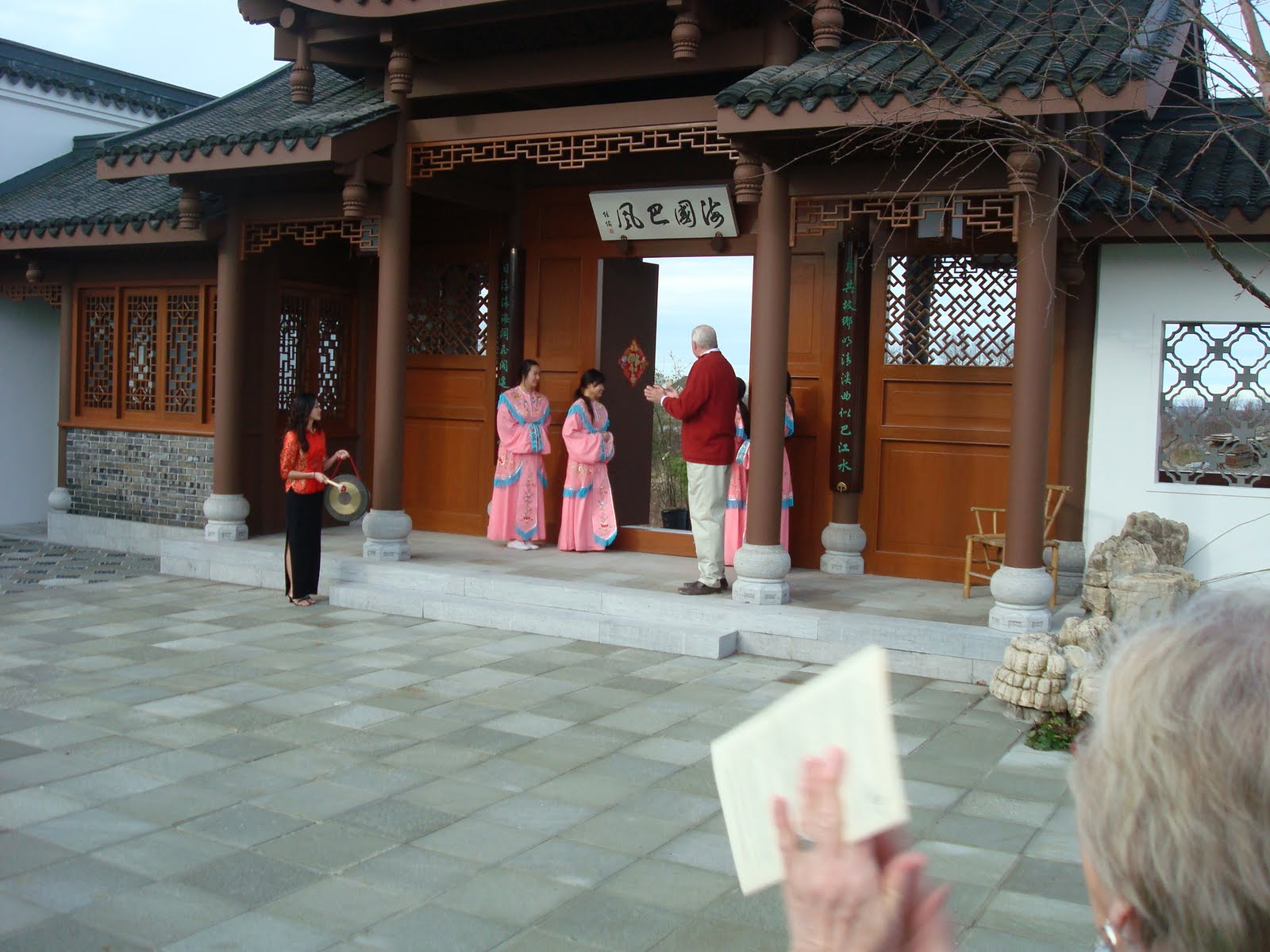
A few days ago, the fine folks at Seattle Chinese Garden (西華園) threw a party to celebrate the opening of their main courtyard and I was invited to pour the tea.

The courtyard is called Knowing the Spring (知春院) and was recently finished by Chinese artisans visiting from Chengdu. Although there is still lots of exciting work to be done over the next few years, the garden will open to the public starting February 6, 2011 (please check the official website for hours).

Here is a little peek at the finished courtyard.

Fireworks popping outside the elegant and humble entry gate.

Inside the courtyard

Beautiful Stones

Ceremonial gate interior view


Ceremonial gate exterior view


Before you go.... Click here to view an über dreamy map of how amazing our city's garden will someday be.

Sunday, June 13, 2010

North Shore and Queer Stones

January 15, 2010 marked the first day of my most recent Taiwan tea trek. It turned out to be an exciting day filled with grand adventures and wonderful food.

My plan was to spend the entire day with my Mandarin teacher's aunt Rose and uncle John and then to have dinner with them, several other friends, and her parents Henry and Mei.

In an email sent to me by Henry prior to traveling, he had written, "I might introduce you to one of my good friends, Mr. Lin, who is a 'lover of queer stones' and you may see his interesting collections." As you might imagine, I found that very intriguing.

John and Rose were the sweetest couple and they took very good care of me. After a fortifying round of Da Hong Pao (大紅袍) tea , we had a nice light breakfast at a vegetarian buffet. Then the three of us took a cab to Jiufen (九份) for some tea and sight seeing.

Da Hong Pao with John and Rose


Jiufen is a cool little tourist town set in the cliffs overlooking Taiwan's beautiful Northern coast. We wandered the pedestrian-only "old street" (老街) and I purchased some inexpensive tea scoops from a vendor specializing in wooden trinkets. I also purchased an adorable pair of slippers for my daughter. In addition to shopping and chatting, we also sampled lots of tasty little snacks from a wide variety of food vendors (some pictures of which can be found here). We stopped for tea and lunch at a scenic tea house with a breathtaking view of the north coast and ordered a pot of Dong Ding oolong (凍頂烏龍).

Jiufen Vista


After Jiufen we spent a few magical hours exploring the wild natural rock formations at Yeliu Park. I already blogged about that so if you missed it here's the link.

We all had a great time chatting and exploring as we drove counterclockwise around Taiwan's north coast. Our taxi driver quickly became our new friend.

Unfortunately, my camera ran out of power due to all the photos I took at Yeliu. So the rest of the evening only exists in my hazy memory. I say "hazy" because at this point I'd been awake for over 48 hours and although I was having an incredible day... a body can only run so long on adrenaline and good tea.

We stopped at an awesome little beach park called Stone Gate (石門), which was covered in shells, and then we drove through Danshui (淡水) and back into Taipei. Our dinner destination was an old-style Taipei seafood restaurant that sourced most of its ingredients fresh from Penghu island (澎湖島). Of course I didn't partake in any of the seafood, but my hosts treated me to a vast array of vegan dishes including a hearty noodle soup. John and Rose ordered a teapot of "hot Coke with lime," which was actually pretty tasty. By the end of the meal I was comfortably stuffed.

After dinner Henry said that it was now time to see the "Queer Stones." I had no idea what to expect. We walked through a confusing maze of Taipei streets for almost 15 minutes before stopping at the entry gate to a private residence. As we walked through the gate, I knew I was in for a truly special experience.

The house, or shall I say "wondrous mansion," was filled with the most amazing collection of stones. Some were huge and some were tiny, but most ranged between soccer ball and basketball sized. What made them so special was the natural pictures found on them. I came to learn that many Chinese are into Qi Shi (奇石) (often translated as "strange stones.") If you run a Google search for
"奇石" you will find hundreds of Chinese websites and blogs devoted to the phenomenon. I was told that the stones are 100% natural, but some cleaning, buffing, and polishing is permitted. Mr. Lin (林同濱) (who actually turned out to be in Beijing at the time) travels all over the world searching for queer stones to feed his fascinating obsession and he had hundreds of jaw-dropping, awe-inspiring stones in his collection.

I was pretty bummed that my camera battery was dead, but I was given a pamphlet with some of Mr. Lin's stones. Here are six photos of Qi Shi that I took from this pamphlet. (My deepest respect and thanks to the original photographer and Mr. Lin. I truly hope that you do not mind my taking and using of these photos of your stones. I welcome any input at blackdragontea@gmail.com).


Surrounded by a museum of stone treasures, we all shared an amazing Hehuan Shan High mountain oolong (合歡山高山烏龍茶) and chatted for hours.
I really wish I could have spent longer exploring the world of Qi Shi, but my hosts could tell (quite to my embarrassment) that I was about to fall asleep on the couch. At this point I was taken back to Henry and Mei's apartment to get some much needed sleep.

Saturday, January 30, 2010

Yeliu Rocks!

Yeliu (野柳) is a wonderland of cool stones, fossils and beaches located on Taiwan's beautiful north coast. Its many bizarre rock formations were naturally shaped by wind and water over millions of years.

Yeliu park is easily worth its small entrance fee and is a worthwhile day trip if you're ever in Taipei.

On January 15, 2010 I was lucky to visit this special place with my Hong Kong friend's John and Rose. Here is a gallery of my Yeliu photos:

An alien mushroom army!

A cool fossil.


Yours truly having fun at Yeliu!


These "candle formations" really blow my mind.


Cleopatra maybe?


Another cool fossil.


Stone dimples.


A palm tree maybe?


This little cutie is called "the ice cream cone."


This one was my favorite photo!


This is your brain on drugs.


Yeliu cliffs.