Showing posts with label bubbles. Show all posts

Monday, October 15, 2012

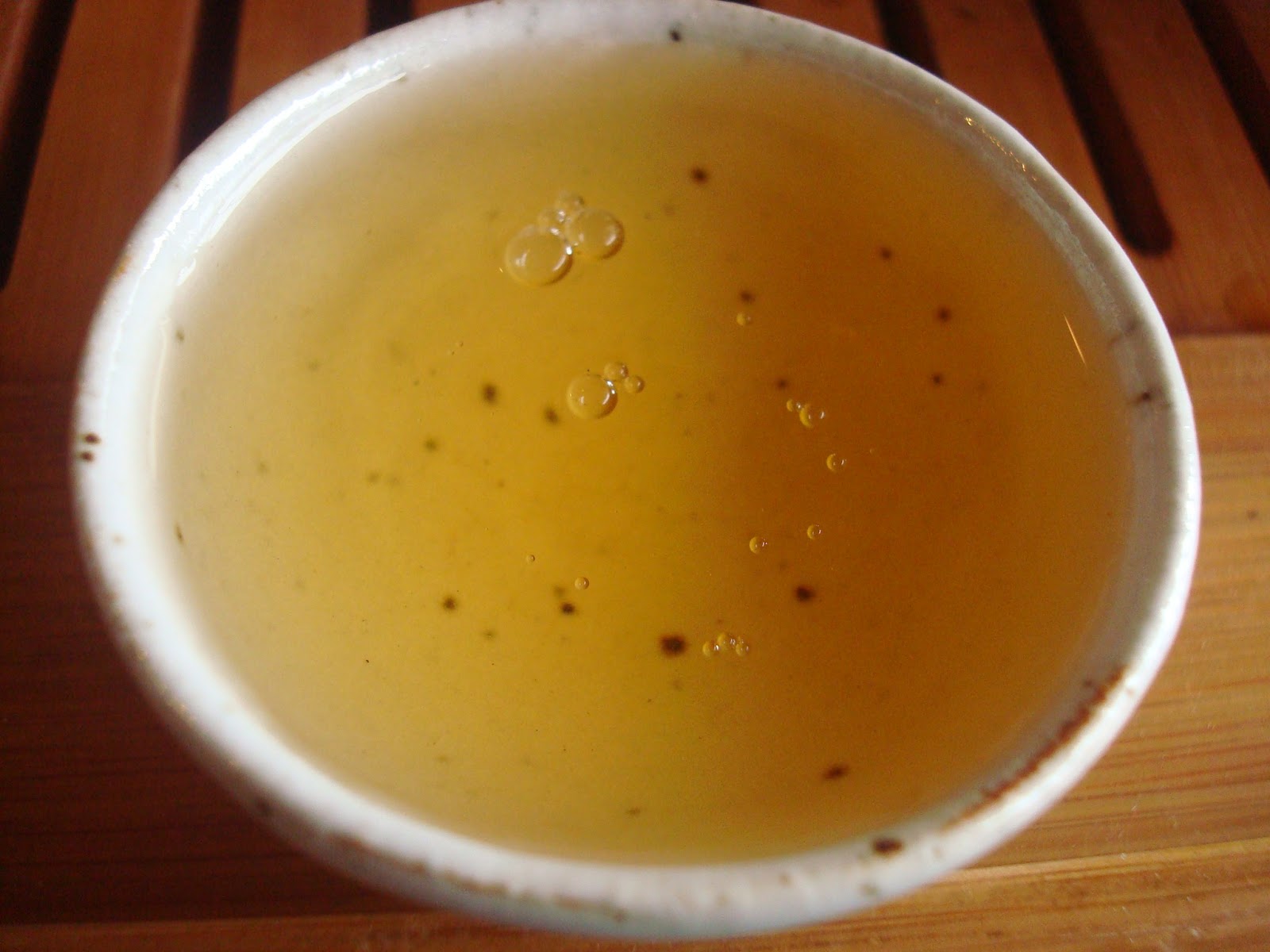
Nineteen Bubbles

Thick and fragrant sheng
with bubbles strong and splendid.
Nineteen tiny pearls.

Monday, October 24, 2011

Taiwanese Shaken Tea

The first time I heard about Taiwanese shaken tea was back in 2005, when my friend Josh C. hosted me for two nights in Tainan (臺南). We went to a beautiful teashop where Josh was clearly considered a VIP. While we savored some of the finest oolongs I've ever experienced, Josh pointed out the servers behind the counter, who used martini shakers to blend chilled tea with natural flavors and sweeteners. These shaken beverages were then poured into lovely glasses and served to delighted customers. During my first few trips to Taiwan, these shaken tea beverages seemed to be all the rage.

My first taste came a year later. While waiting for a bus in Fengyuan (豐原), my buddy Darald and I walked around the nearby streets in search of tea. We randomly entered a stylish teahouse and attempted to order some good tea using our limited Mandarin. It turned out they didn't serve regular tea, only shaken tea. We almost left, then decided "what the heck" and placed our orders.

After a few minutes of waiting next to an indoor waterfall our drinks were served. I can't remember what Darald ordered, but I got this:


It turned out to be "honey, grapefruit juice, and baihao oolong garnished with a cherry tomato." I saw the server shake it up. I'd never had anything like it before and yes, it was delicious.

I've since tried similar beverages a few times and have learned a few interesting tidbits in the process. For one, shaken tea is synonymous with bubble tea in Taiwan because it has foamy bubbles floating on the surface of the glass. My previous notion that bubble tea must contain tapioca pearls turns out to be a misconception. Also, the reasons for shaking the tea go beyond just mixing the ingredients and making bubbles; it is believed that shaking oxygenates the tea which results in cleaner, bolder flavors.

I wonder what would happen if you were to vigorously shake a martini shaker full of plain pure tea and compare its flavor to its unshaken counterpart? Perhaps I should try some experiments.

Wednesday, April 21, 2010

The laid back person's guide to boiling water for tea.

Depending on who you ask, hot water is pretty important for proper tea brewing. Some people do use cold water but that tends to take much longer and so, like most people, I prefer to use the hot stuff when I brew my tea. Boiling water is very hot... but you don't have to worry about that... just follow these 5 easy steps and you'll be staring at a vessel of scalding hot water in no time!

Step 1 - Find some clean fresh water. Those of us who live in urban areas will often find it lurking in faucets or hoses, while rural water usually hides out in lakes, rivers and glaciers. Should you happen to live in a very dry place you may need to use a dowsing rod.

Exhibit A - Fresh water in its natural habitat.

Exhibit B - An average everyday elephant head faucet.


Step 2 - Pour the water into a heating vessel. A stove-top kettle or an electric kettle is preferred, but a metal cooking pan (MCP) will work in a pinch.

Exhibit C - One totally awesome tea kettle!

Exhibit D - Your typical MCP
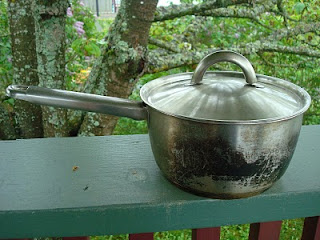

Step 3 - If you're using a stove-top kettle or a MCP, put it on a burner and turn the heat to its highest setting. If you are using an electric kettle, follow the manufacturer's recommendations for turning it on (usually there is some sort of switch manipulation involved).

WARNING: Do not let your out-of-town guests accidentally put your electric kettle on a hot stove-top burner as this will result in melting plastic and toxic fumes which are generally considered bad for tea making.

Exhibit E - NOOOOO ! ! ! !


Step 4 - Wait. In my opinion, this is the easiest of the five steps. You can use this down time to catch up on some other tea making steps, use the bathroom, or just zone out. Feel free to watch the pot if you want to, because numerous experiments have proven that, contrary to some household myths, "pot watching" does not effect boiling.

Step 5 - Turn the heat off when the water starts boiling. Some kettles will whistle when this happens, but if yours does not, or if you are using a MCP, the vessel will also shake, rattle and produce lots of steam. The water inside it will look hot and bubbly. All of these are good signs that your water is now boiling! Electric kettles, on the other hand, will turn themselves off when they have reached boiling. That moment is often accompanied by a satisfying little "click" sound.

Exhibit F - Mission Accomplished!
Monday, July 20, 2009

Steam

The history of steam is long and fascinating. It is a natural force that has made things happen for millennia. One Chinese word for steam is shuiqi (water gas) (水氣). Qi (氣), besides meaning "gas," also refers to the energy that flows through ourselves and the universe. When we humans eventually tamed steam's awesome energy, we found many new uses for it, such as making electricity, cooking food, powering trains and sterilizing instruments. One of steam's sometimes overlooked powers is its ability to soothe and comfort us. To a tea drinker, steam is a beautiful companion that flows and sways like a graceful dancer.

The appreciation of steam (and bubbles) will enhance your overall tea drinking experience. Here are a few tips to get the most out of your steam:

1. Spend a minute with your fresh-brewed cup held right below your face. Breathe deeply and evenly to feel the hot steam's gentle caress on your cheeks, mouth and nose.


2. While drinking tea many years ago, an elderly Chinese gentleman instructed me to "tea-steam" my eyes by looking directly into an aroma cup (聞香杯), while rolling my eyeball. Make sure it's not too hot of course! The man told me it was very good for the eyes and although I've never seen anyone else do this, I still enjoy doing it from time to time and think it feels great.


3. When brewing Chinese tea in a small clay pot, my mentors will often pour a small amount of boiling water onto the teapot during the infusion. Besides keeping the teapot extra hot this step will also produce a glorious burst of sweet organic steam that will rise like a triumphant phoenix.


During every tea tasting, while we are appreciating tea's many heavenly qualities, let us not forget to honor our friend, steam.

Thursday, July 16, 2009

The Original Bubble Tea

In the history of the universe, googols of bubbles have come and gone. I like bubbles. I especially like the bubbles that live (if only for a second) on the surface of my tea.

What does it mean when bubbles are floating on our tea? Are they trying to tell us something? In their interesting article, "A Survey of the Gelatinous Qualities in Tea," Geng Jian Sing and Jhang Yan Ren postulate a connection between the presence of saponin, a "sticky, as if frozen, congealed substance" found in many well-aged puer teas, and a "rich and substantial liquor." There must be truth to that because a single cup of fine tea contains thousands of chemicals that give it its unique aroma, body, healthfulness and flavor. Bubbles may or may not be a sign of saponin, but lingering, well-formed bubbles usually indicate a desirable brothy-thickness... plus they're totally awesome.

This afternoon I sipped a tasty sheng puer tea (生普洱茶) that I purchased in Yingge, Taiwan (鶯歌,台灣). It was produced in the early 1990's (at least that's what the vendor told me). While drinking, I decided to take a few photos of my gaseous little friends.

1st infusion with a low and slow pour


2nd infusion with a high and fast pour


3rd infusion with a low and slow pour


Bubble Chasin' Vid:


So whenever you're drinking tea, always take a moment to appreciate your bubbles. They are like little tea angels surfing in your cup! Make friends with them. Give them names. Dance with them... and please tune in next week for an illuminating post about Bubbles' equally airy cousin, "Steam!"